Field Day and Camp from the Truck
One truck, one friend with a portable station, and a rule: if it didn’t fit in the truck, it stayed home.
The truck isn’t only for operating on the road. Parked, with its awning and shelter set up, it becomes a base camp: shade and shelter, a table to operate from, and the radios, power and camp kit all close at hand. Gary describes the truck as “a complete setup: emergency kits, extra clothing, cookware, stoves, you name it.”
Camp setup
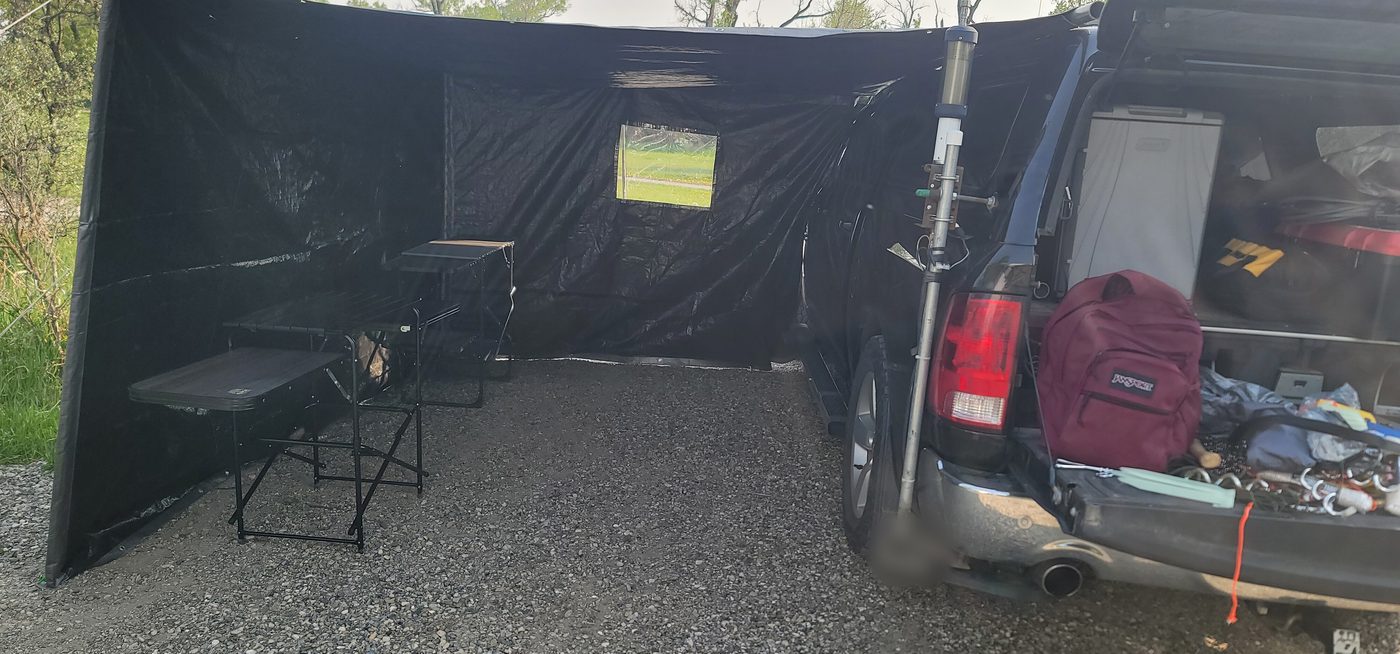
Field Day 2026: Gary’s truck camp
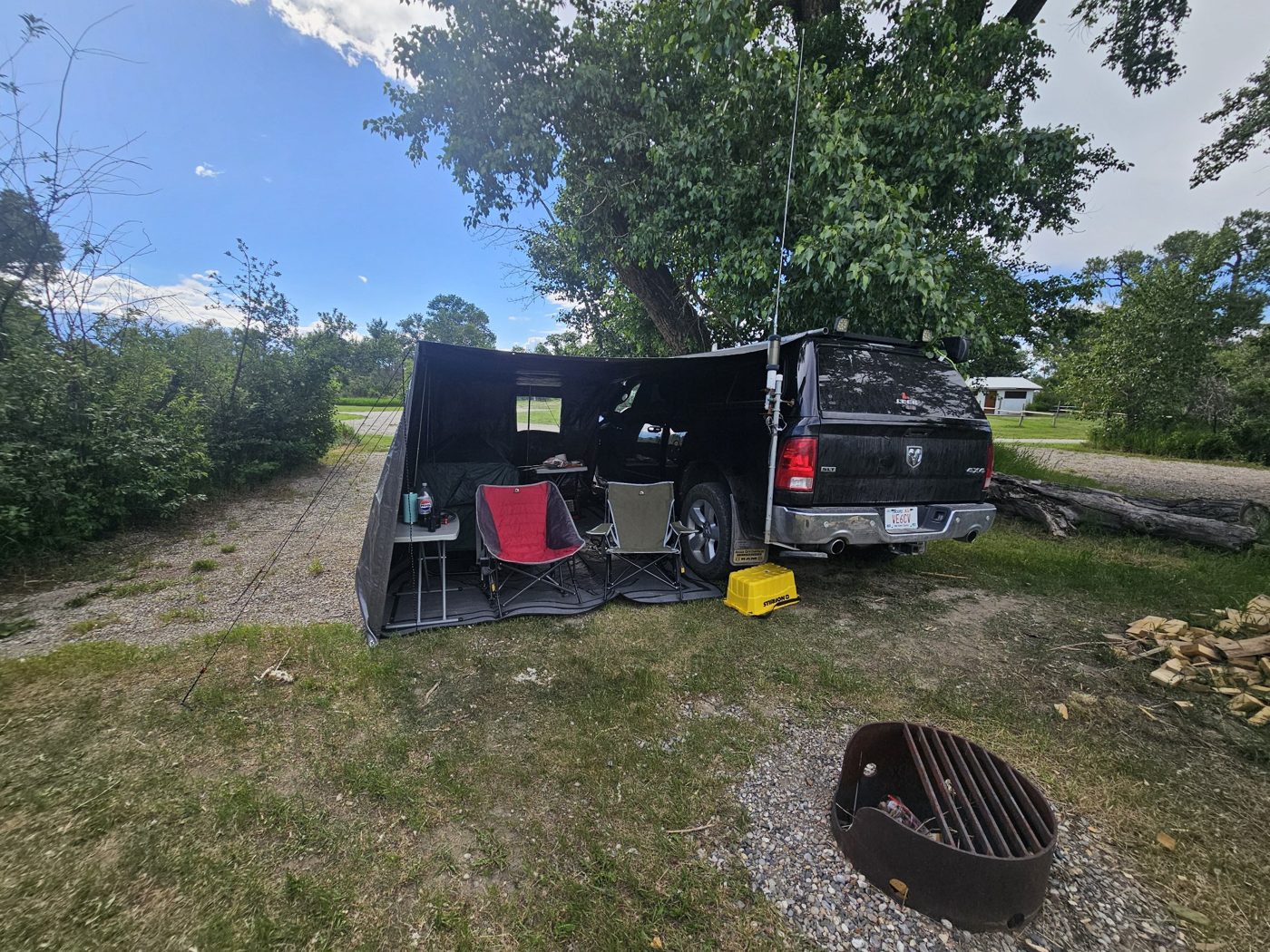
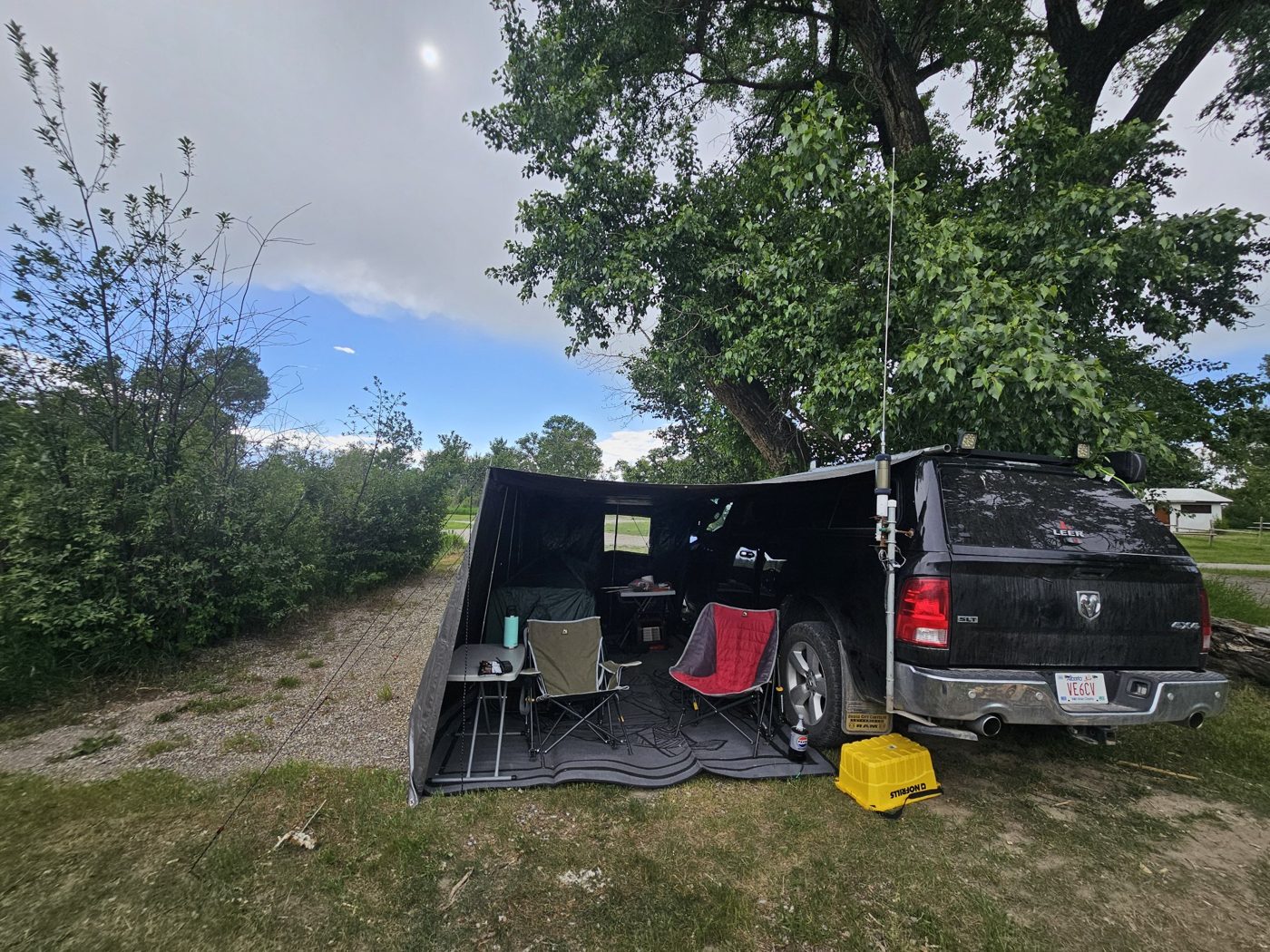
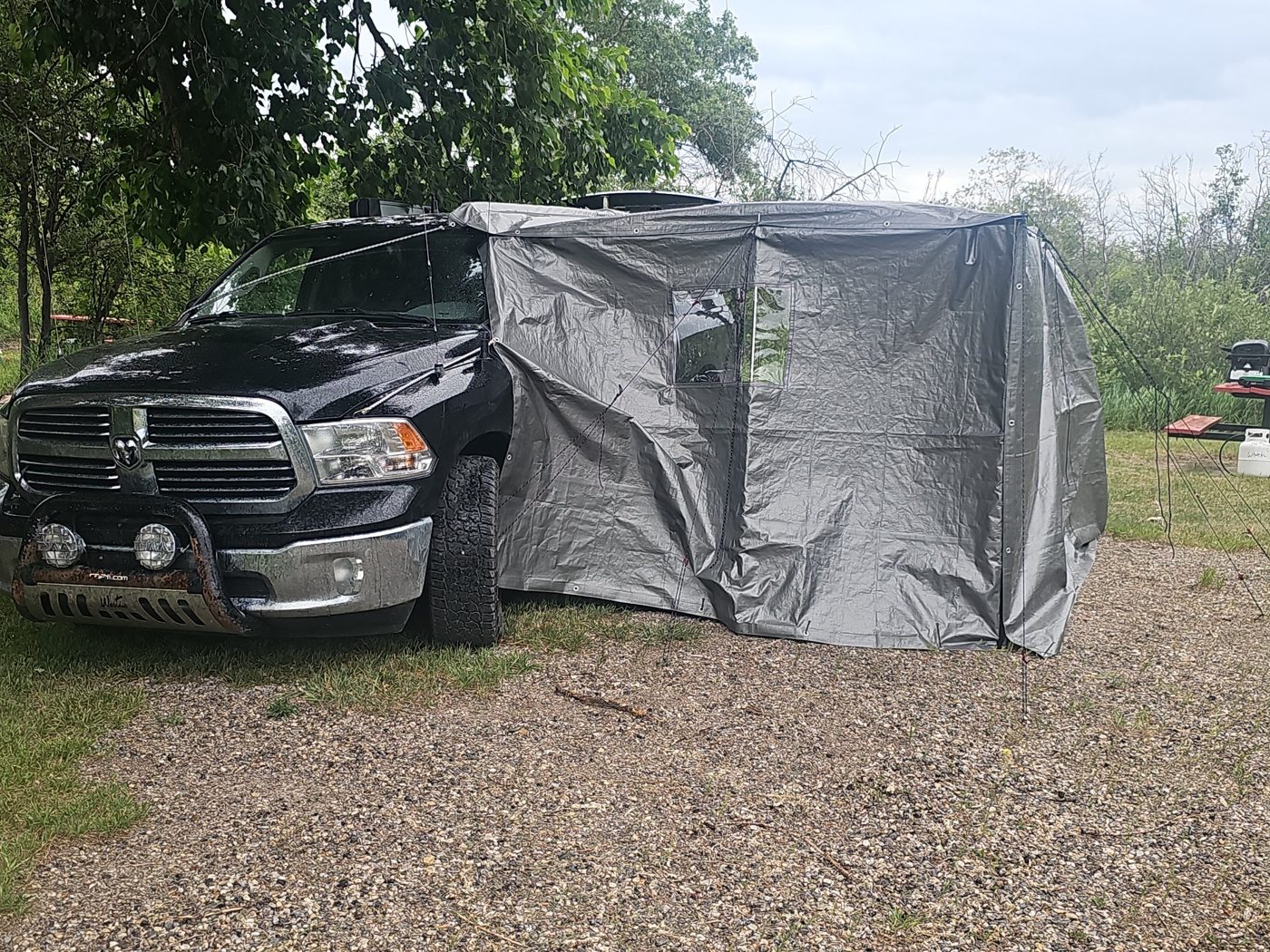
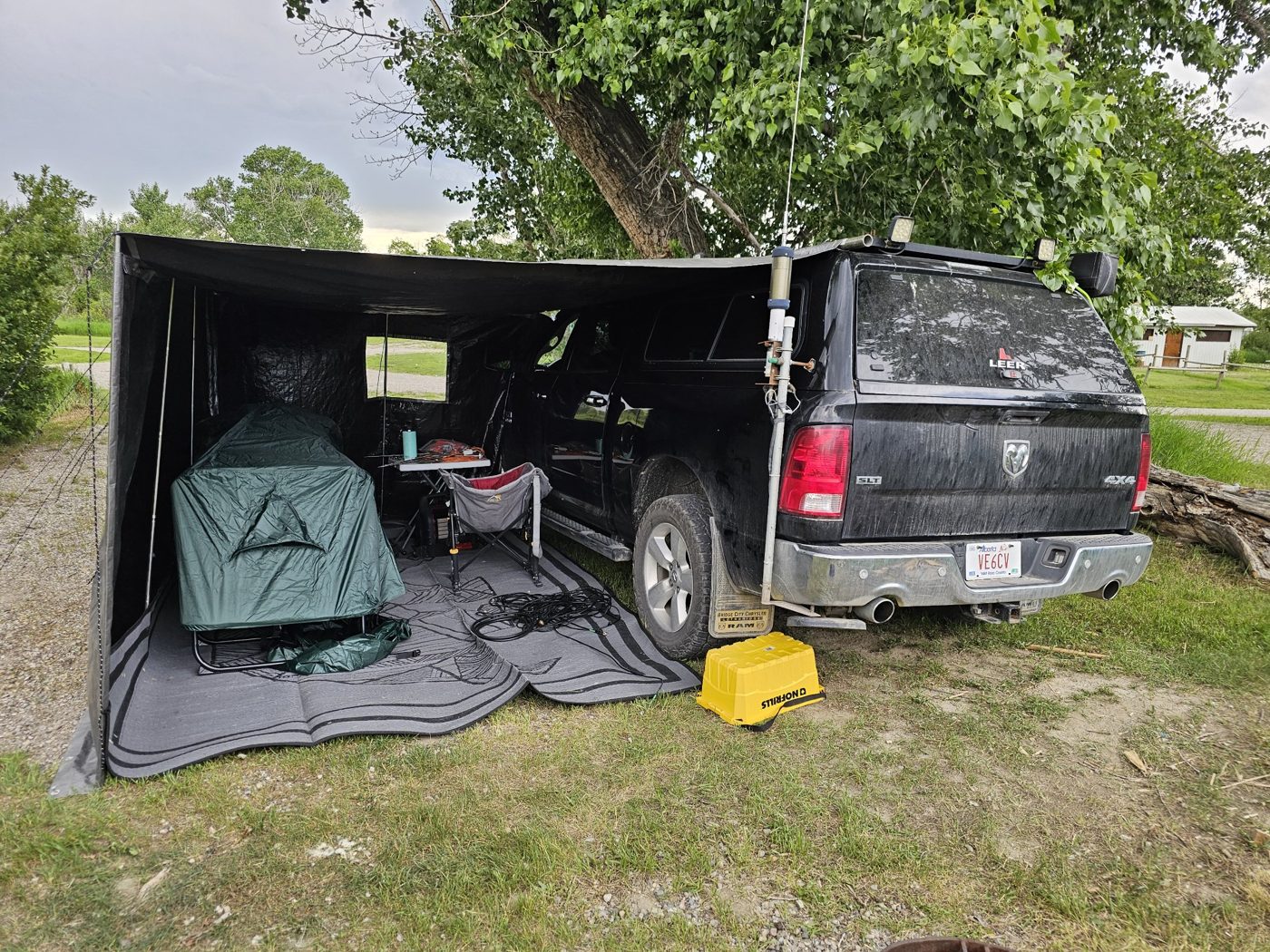
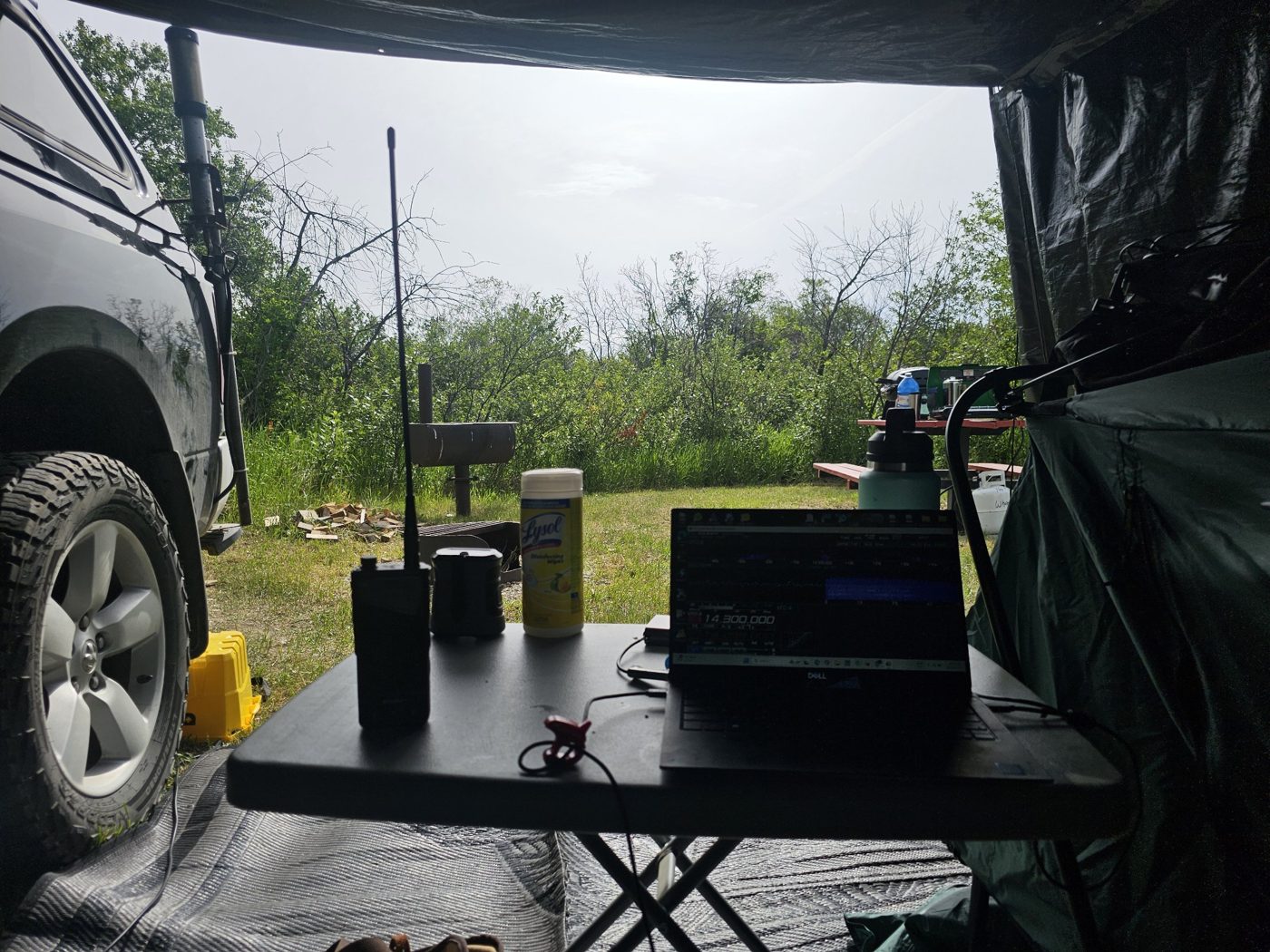
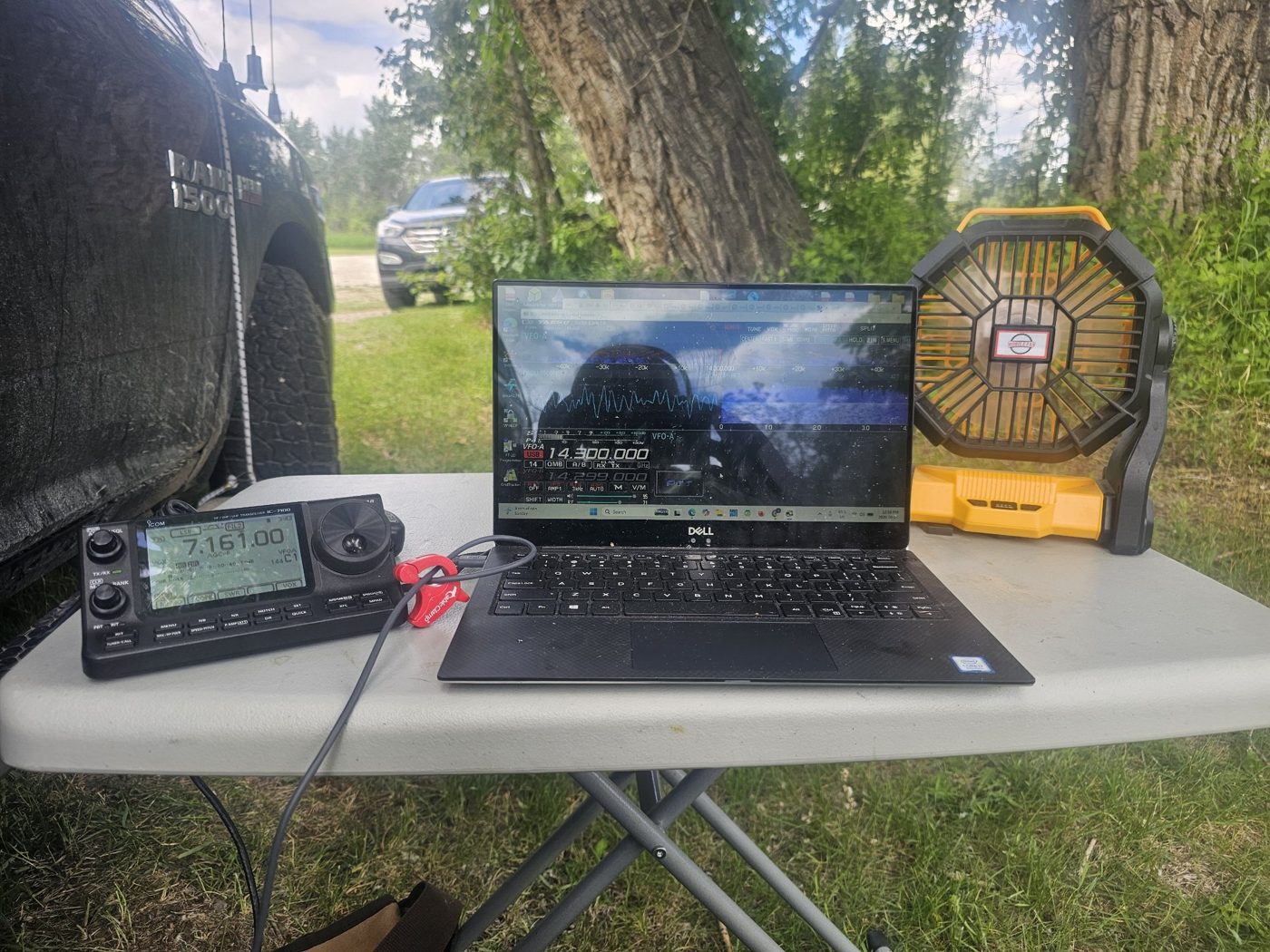
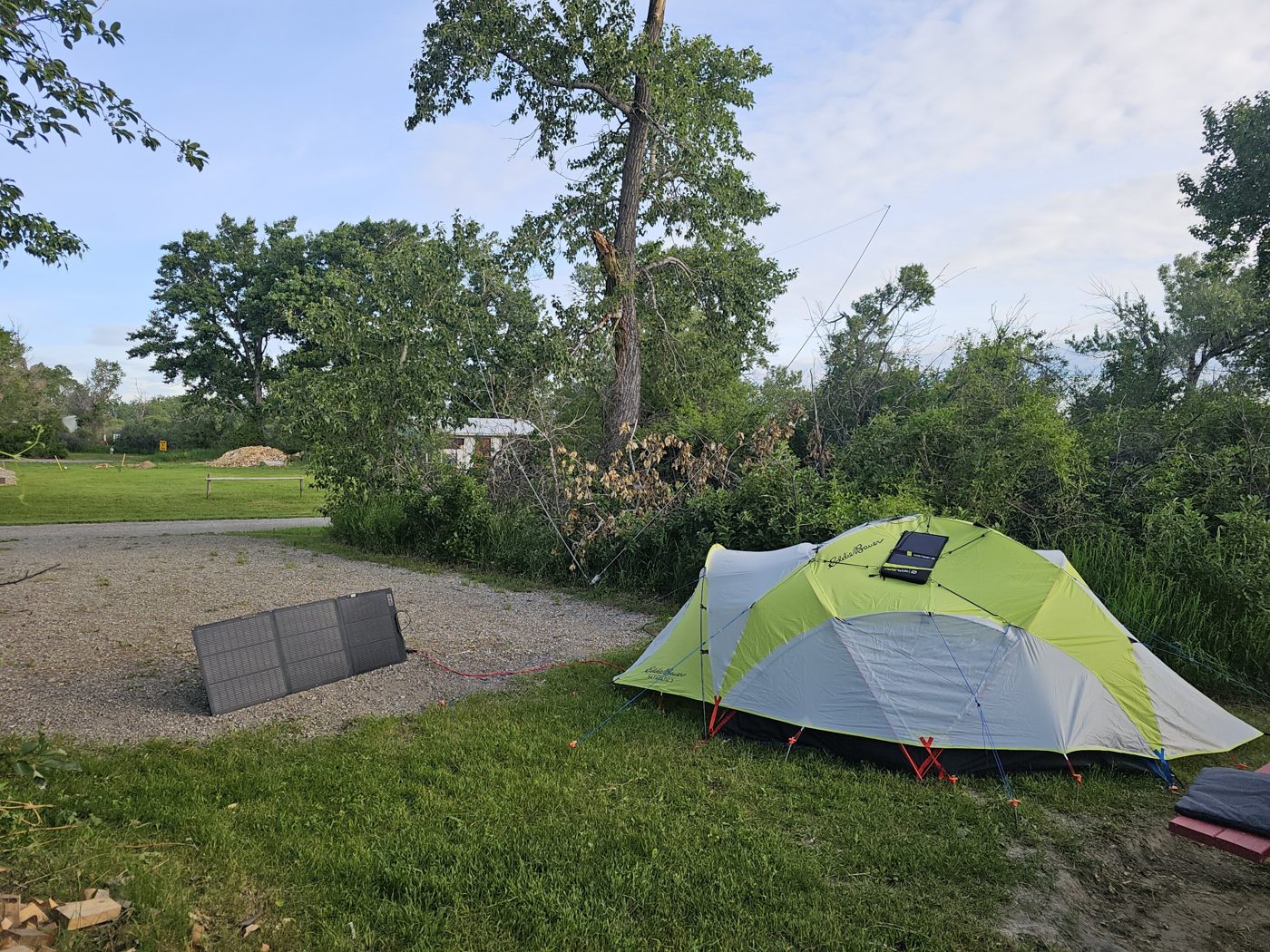
A minimal camp with Cory, VE6COR
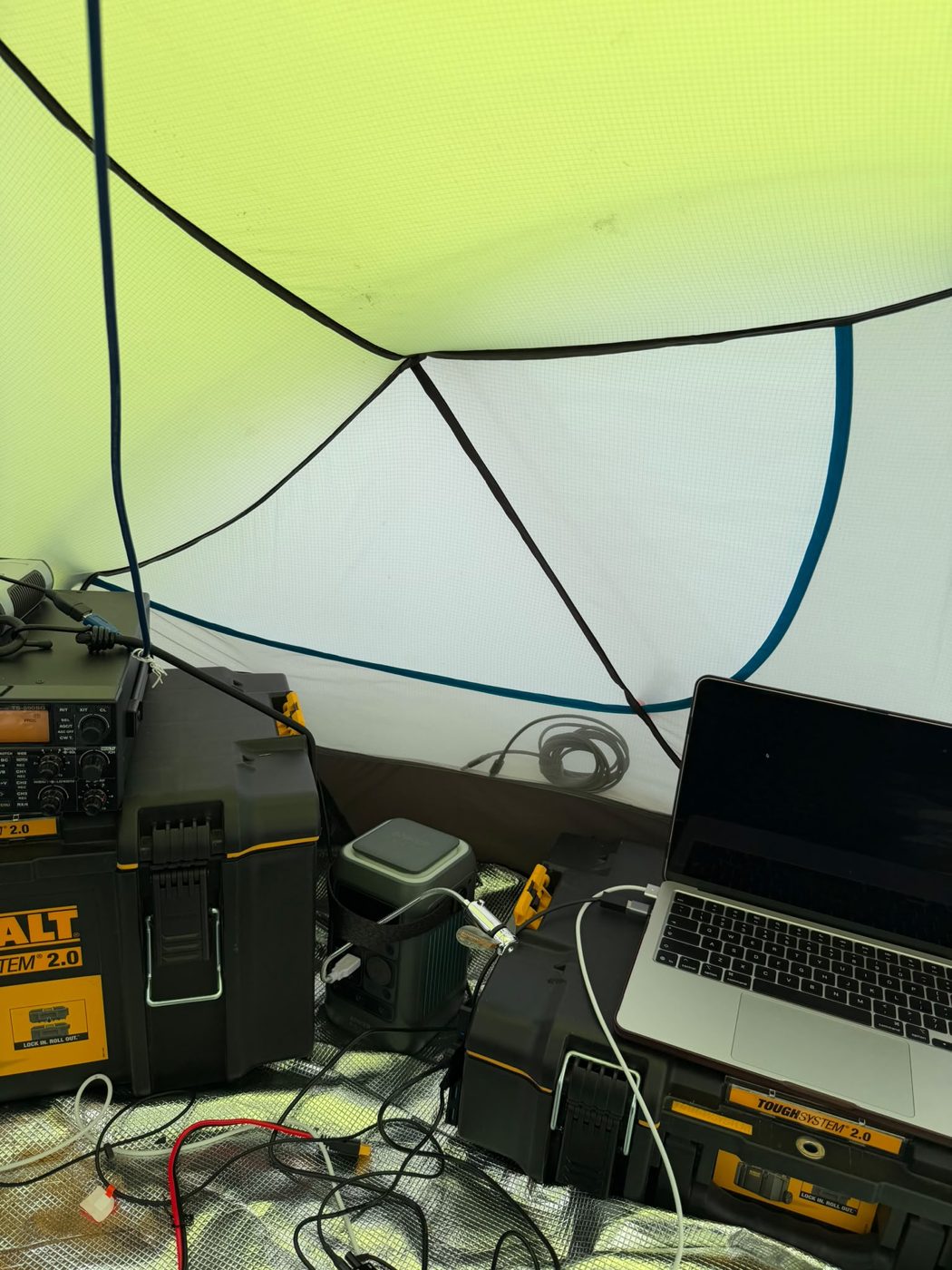
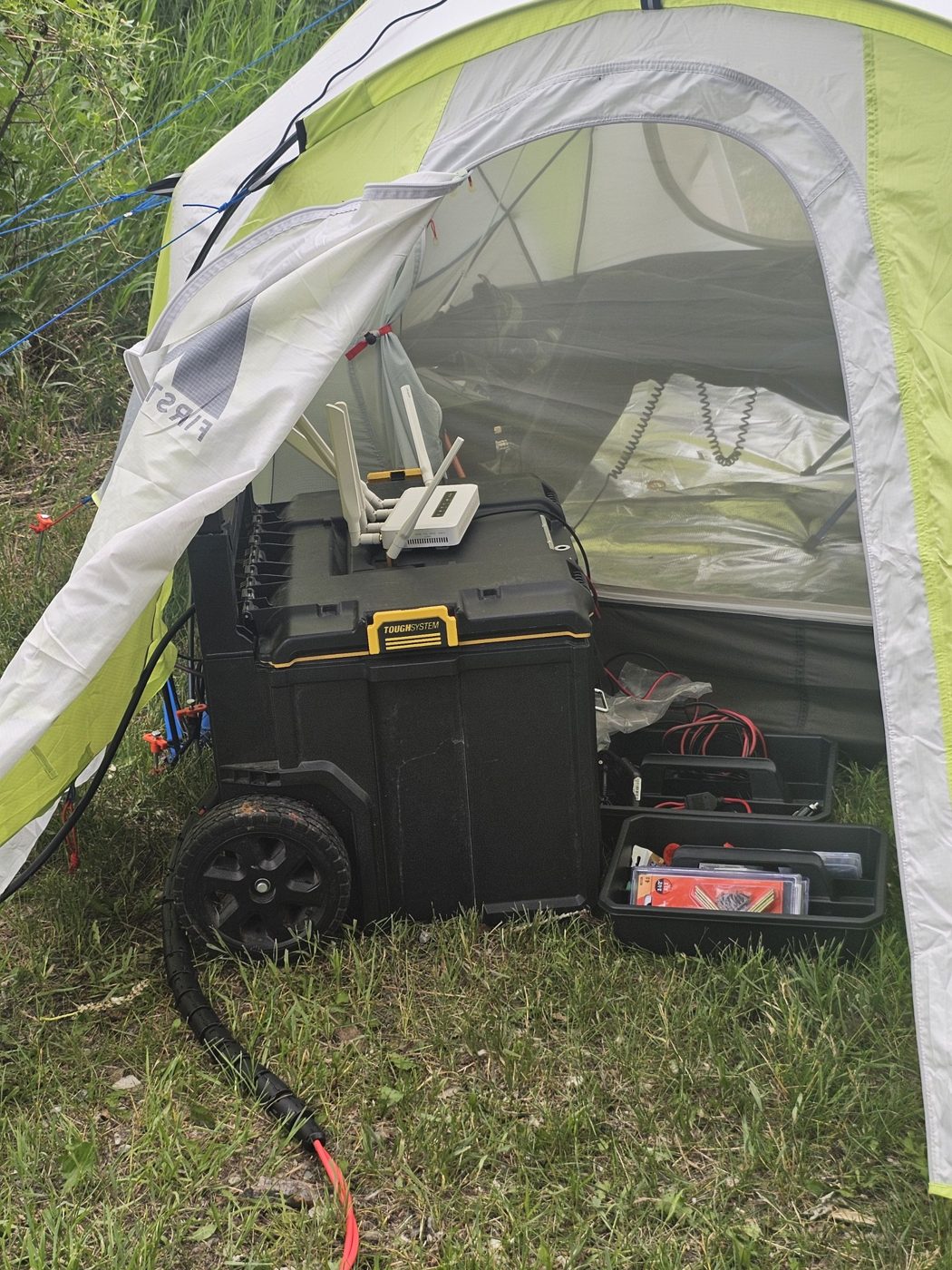
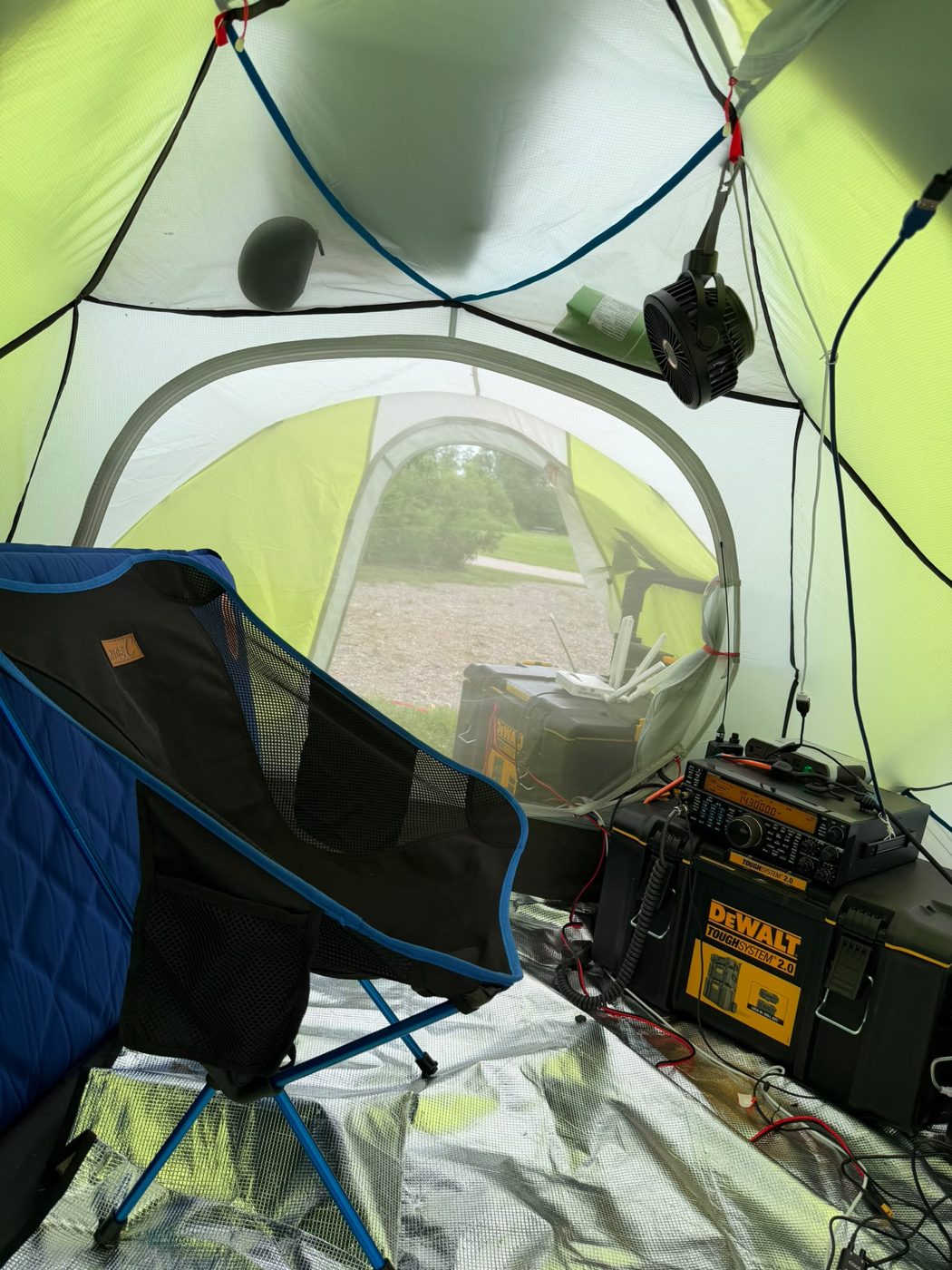
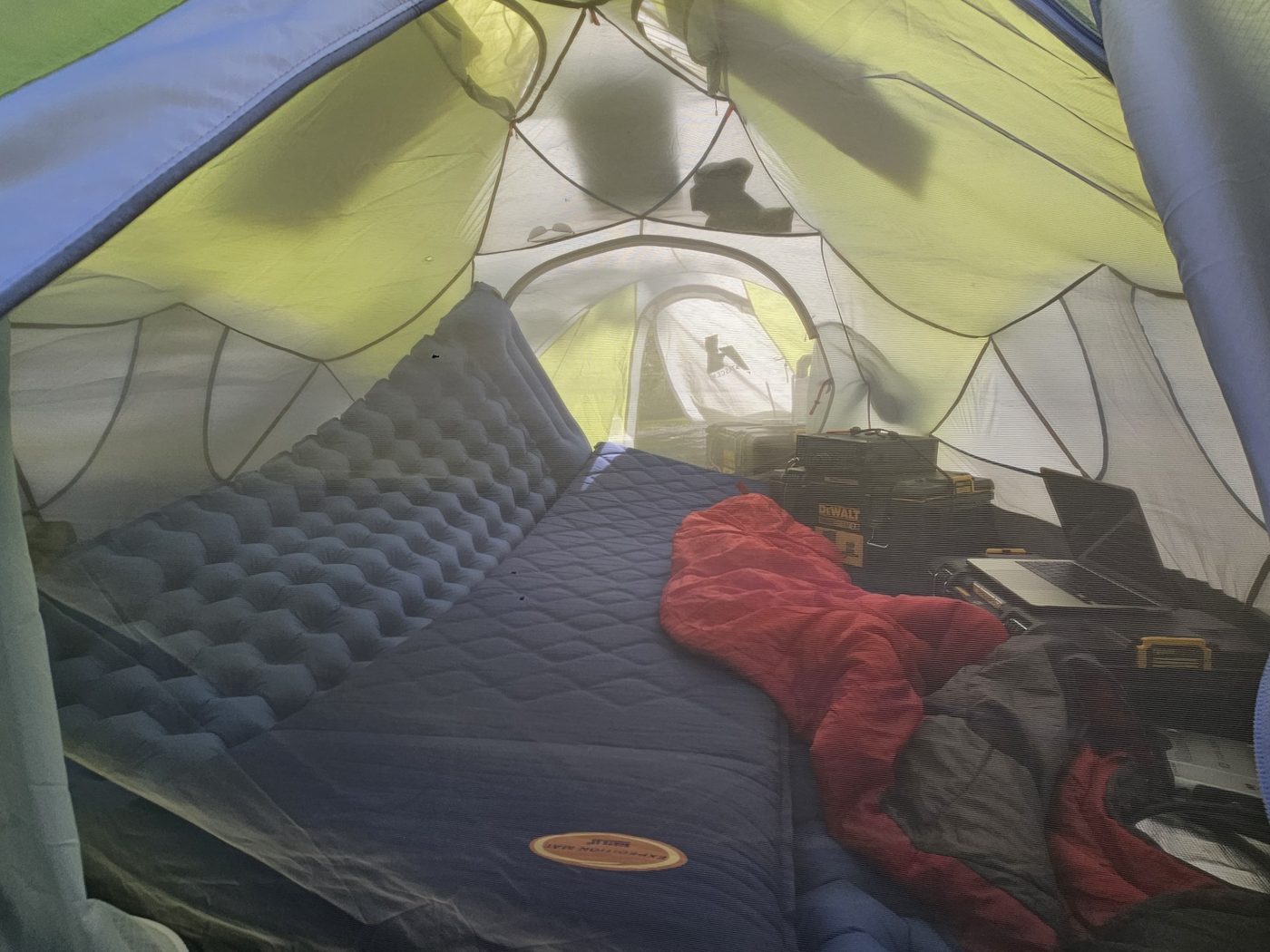
Gary does Field Day and other radio outings with his friend Cory, VE6COR. Cory is blind, and he brings his own portable station. Gary brings the mobile station in the truck. Together that gives them two stations wherever they set up.
“This year we did a minimal camp: if it didn’t fit in the truck, we couldn’t take it.”
Gary Wheeler, VE6CV
A limit like that is good discipline. You find out what you really use, the setup and teardown get faster, and you practise the kind of self-contained operating that matters in a real emergency, which is what Field Day is for.
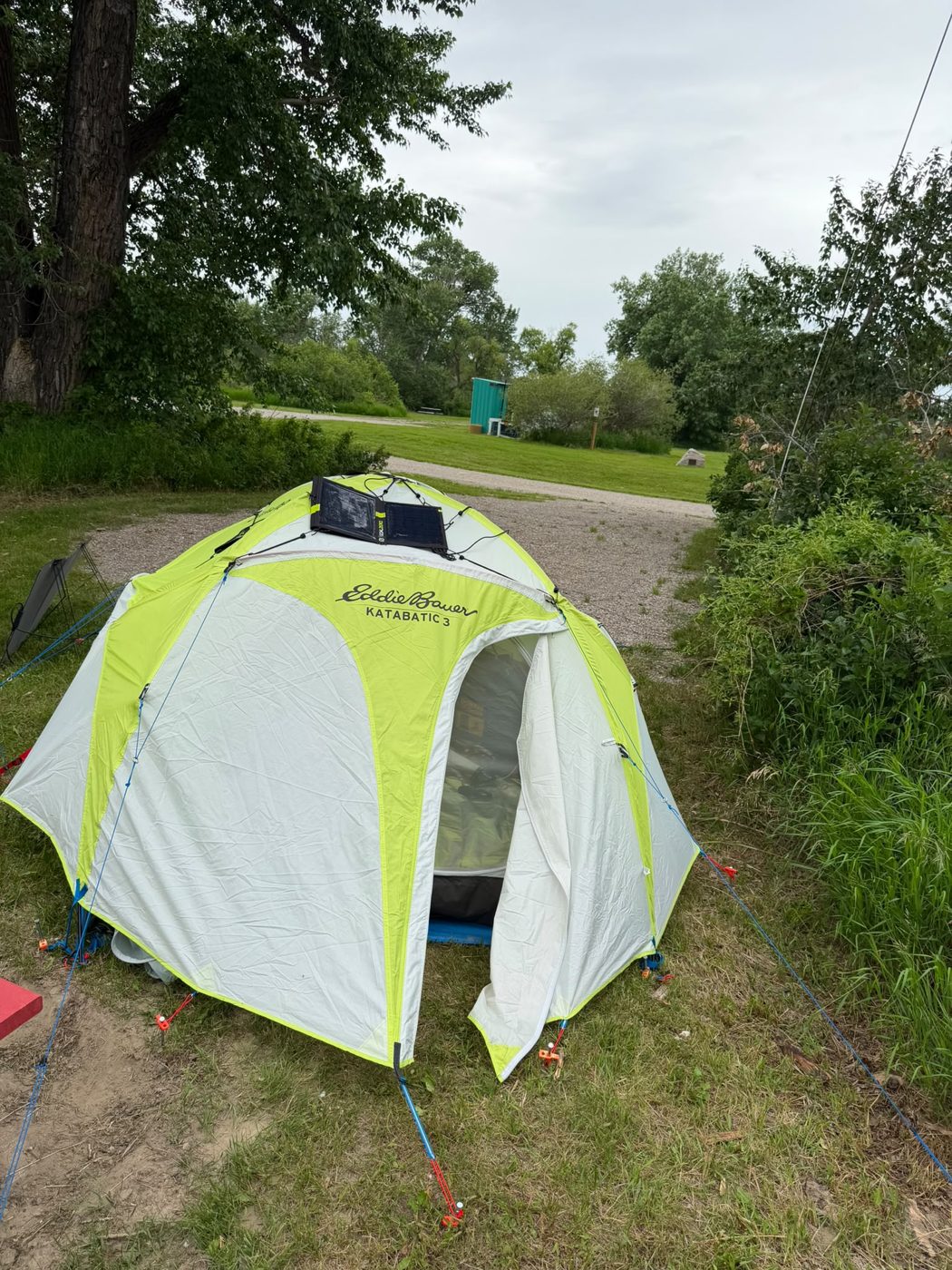
Field Day 2026: Cory’s (VE6COR) tent station
Why go minimal
Less to pack, less to set up, less to forget. Everything has a place in the truck, and anything without a place gets left behind.
Two operators, two kinds of station
A portable station and a vehicle station side by side cover more ground than either alone. If one has a problem, the other keeps going.
Field Day classes
Field Day sorts stations into classes. Class B is one or two people set up portable, and class C is mobile, operating from a vehicle. See contesting and Field Day for the full list and the exchange.
Operating from the table
This is where the IC-7100’s remote control head pays off. The radio body stays in the truck with its power and antenna connections, and the head goes on a 15-foot (about 4.6 m) insulated CAT-5 cable to the table or beside Gary’s chair. There’s also an auto tuner in the field setup.
- Set the table in the shade, out of the wind, where you can see the screen.
- Route the control cable where nobody will trip over it, and keep it away from the cooking area.
- Use headphones. They help you copy weak signals, and they keep the campsite quieter.
- Keep paper and a pencil handy as a backup log, whatever logger you use.
- Watch who’s near the antennas before you transmit. See RF exposure basics on radios and antennas.
Weather and safety at camp
Southern Alberta wind and storms. Stake down shelters and canopies, guy masts, and roll up awnings before the wind does it for you. Late-June afternoons can build thunderstorms and hail quickly. Check West Lethbridge Weather before you set up and through the day. When thunder rolls, stop operating, disconnect the antennas and take shelter in a building or a hard-topped vehicle. Environment and Climate Change Canada says to wait at least 30 minutes after the last rumble of thunder before going back out.
Generators at camp. Run fuel-burning generators outdoors, well away from tents, trailers and the truck’s open doors and windows, with the exhaust pointed away from people. Check the campground’s rules on generators and quiet hours. See power and solar.
A short checklist for a truck-based camp
Before you leave
- Batteries charged and the solar panel clear
- Remote head, control cable and auto tuner packed with the station
- Antennas, coax, supports, stakes and the antenna analyzer
- Fuses and a few spares for every fused circuit
- Headphones, your logger, and paper and pencil as a backup log
- Handheld radio charged
- Shelter, table and chairs, stakes and tie-downs
- Cookware, stove, fuel, water and food
- Extra clothing for wind, cold nights and rain
- First-aid and emergency kits
- The forecast checked, and a plan for wind and lightning
- The test: does it all fit in the truck?
For the full list, use the field setup checklist, and read portable operations for antennas, power and station layout away from home. For the camping side, including gear, sites and weather, see Camping in Southern Alberta on LethbridgeWeather.ca.
Show us your field setup. Whether it’s a full camp or a chair and a whip, post it in Gary’s Mobile HF Ham Radio Operators group on Facebook, about 2,400 members strong.
Sources
- Gary’s truck, Field Day with Cory, VE6COR, the remote head setup and both quotes: Gary Wheeler, VE6CV.
- Field Day classes B (one or two people, portable) and C (mobile): ARRL, Field Day rules.
- Waiting at least 30 minutes after the last thunder: Environment and Climate Change Canada, Lightning safety.
- Generators outdoors, with exhaust away from windows and doors: Government of Canada, Power outages: how to prepare.