
VE6CV Mobile: the Truck Station
A pickup that’s an HF station on the road, a radio base at camp and a power plant when the lights go out. Here’s what’s in Gary’s truck and why.
Gary Wheeler, VE6CV, does a lot of his operating from a 2017 Ram 1500 with a Leer topper. Over the years he has customised it heavily for mobile HF. A 350-watt solar panel on the topper roof feeds the ham station, and the truck carries extra batteries and an inverter. There are HF radios, VHF/UHF and DMR gear, a choice of antennas for when he’s parked or camped, and the test equipment to keep it all working.
The radios aren’t the whole story. Gary calls the truck “a complete setup: emergency kits, extra clothing, cookware, stoves, you name it.” When the weather or the power goes sideways, it’s his fallback: “Worst case scenario, we can be in the truck. Flexibility is the way.”
The truck as a station
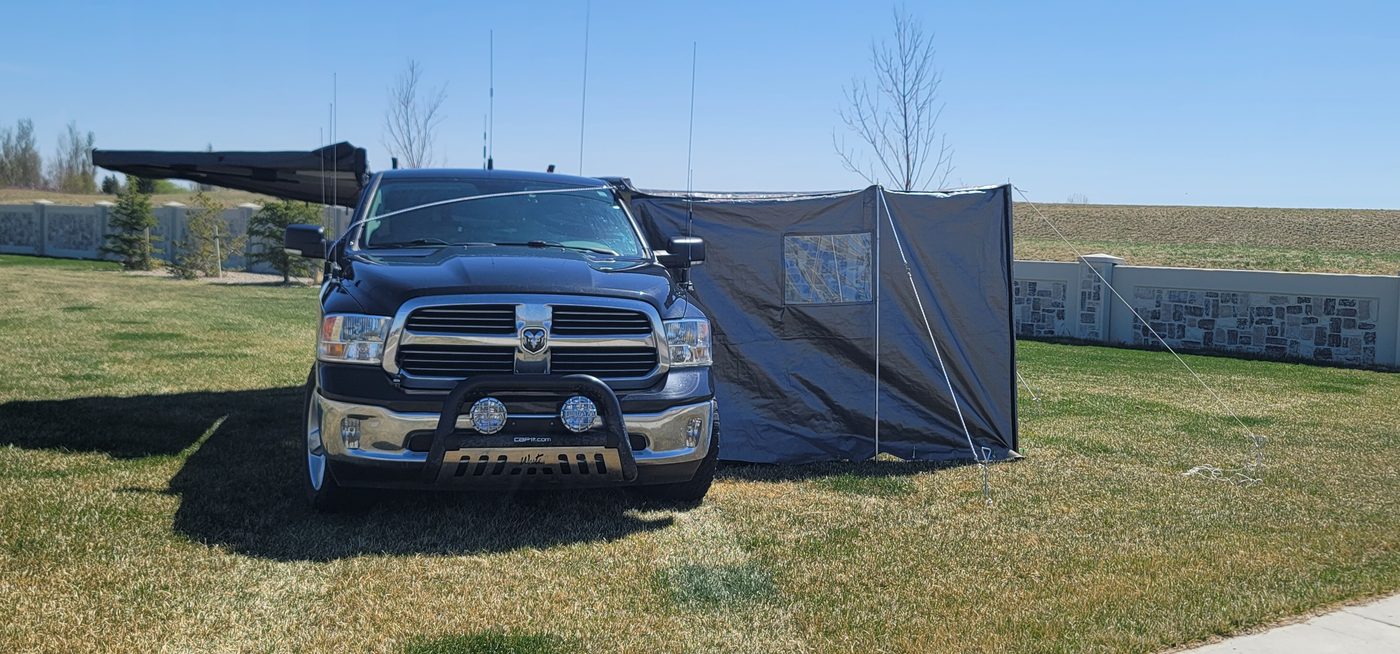
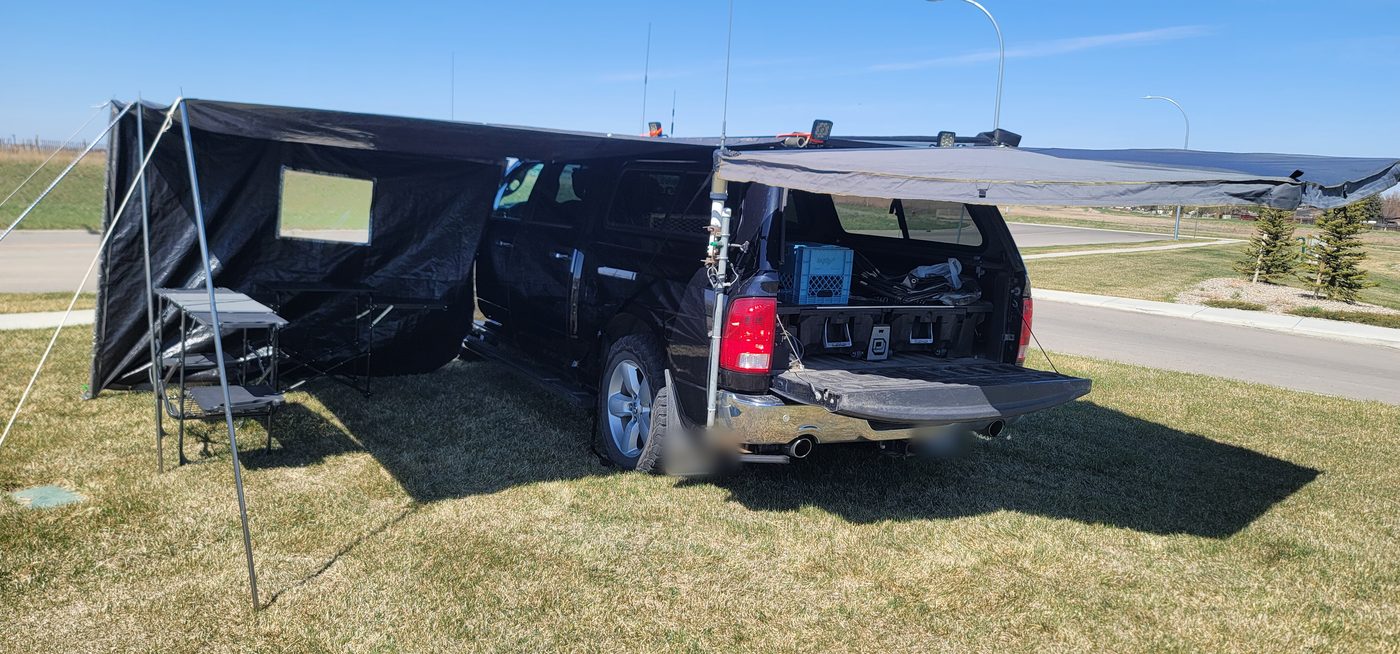
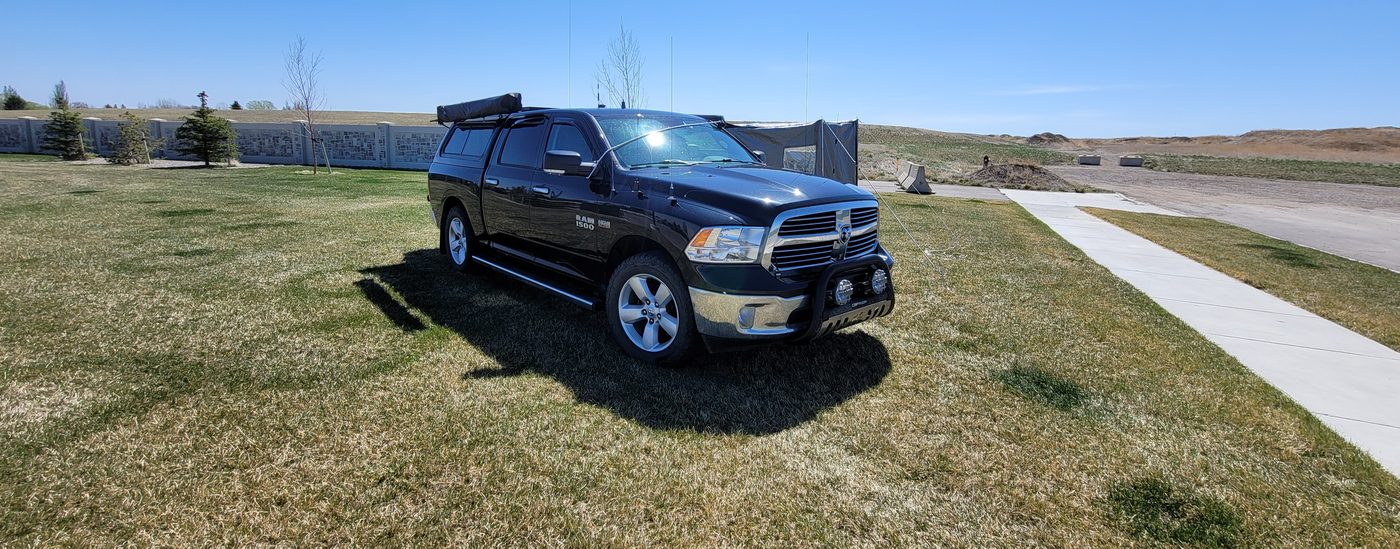
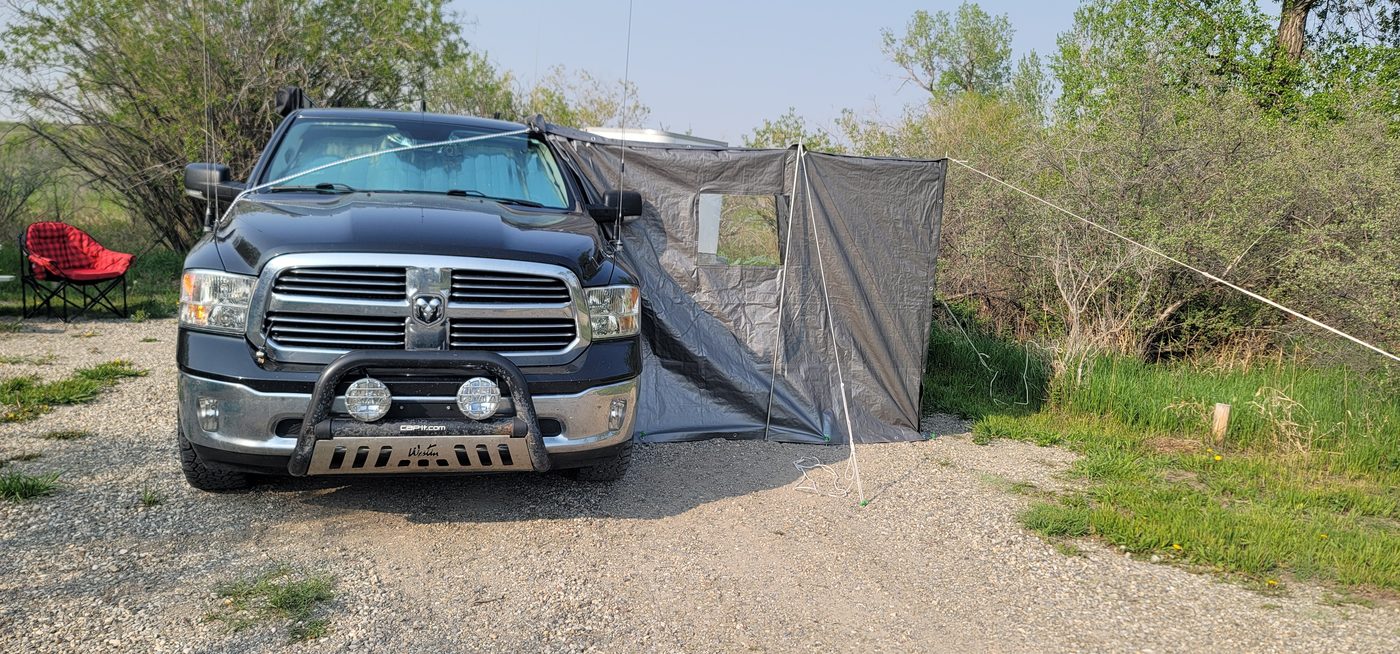
Inside the truck: 2026 photos
Hams often ask what the inside of the truck looks like. Here’s a taste. The full photo tour has more than 30 photos of the console, wiring, antennas, Field Day and camp.
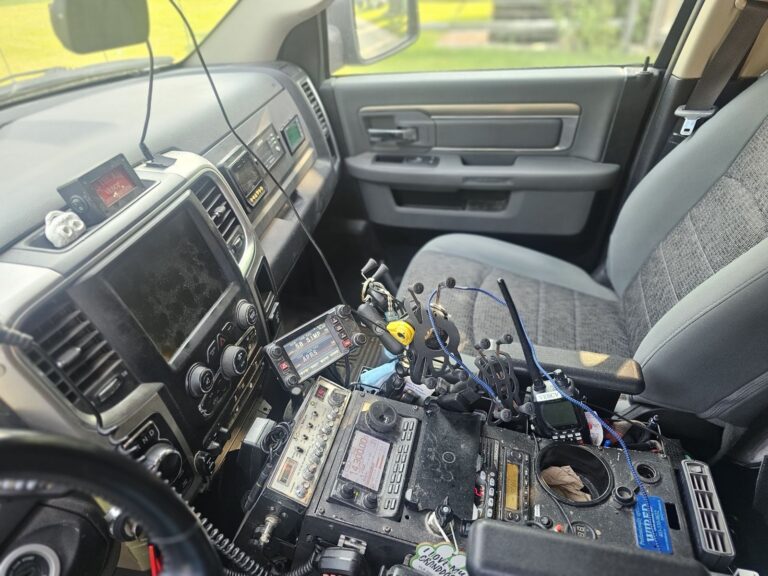 The console from the driver’s seat
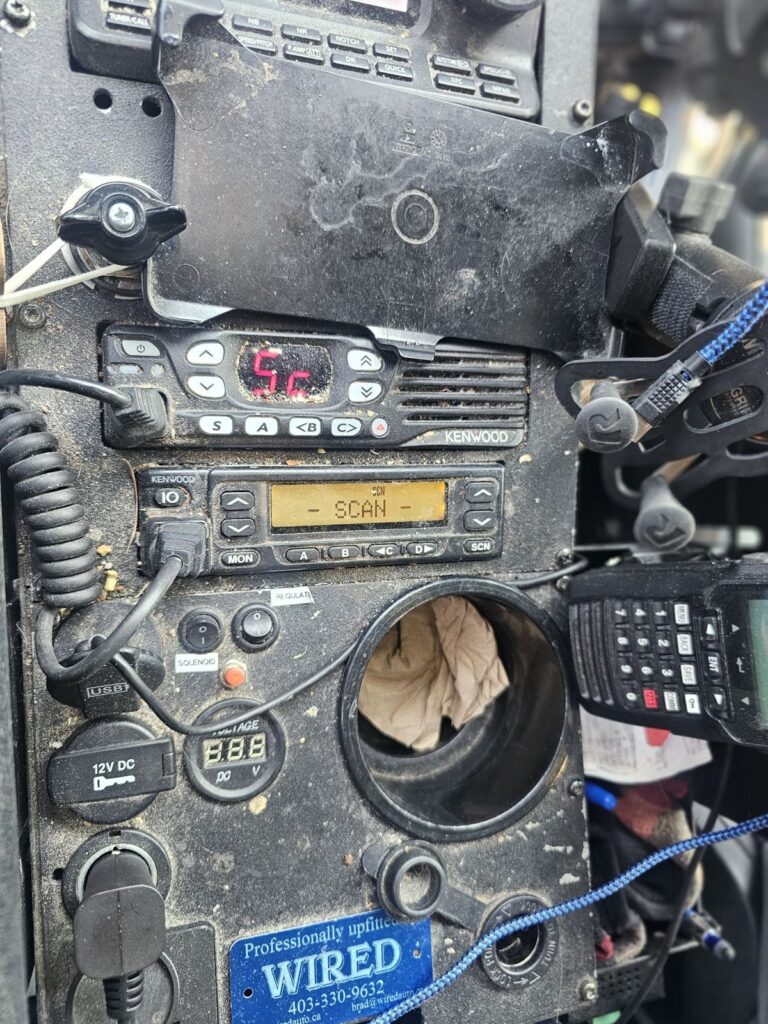 The Kenwood commercial radios
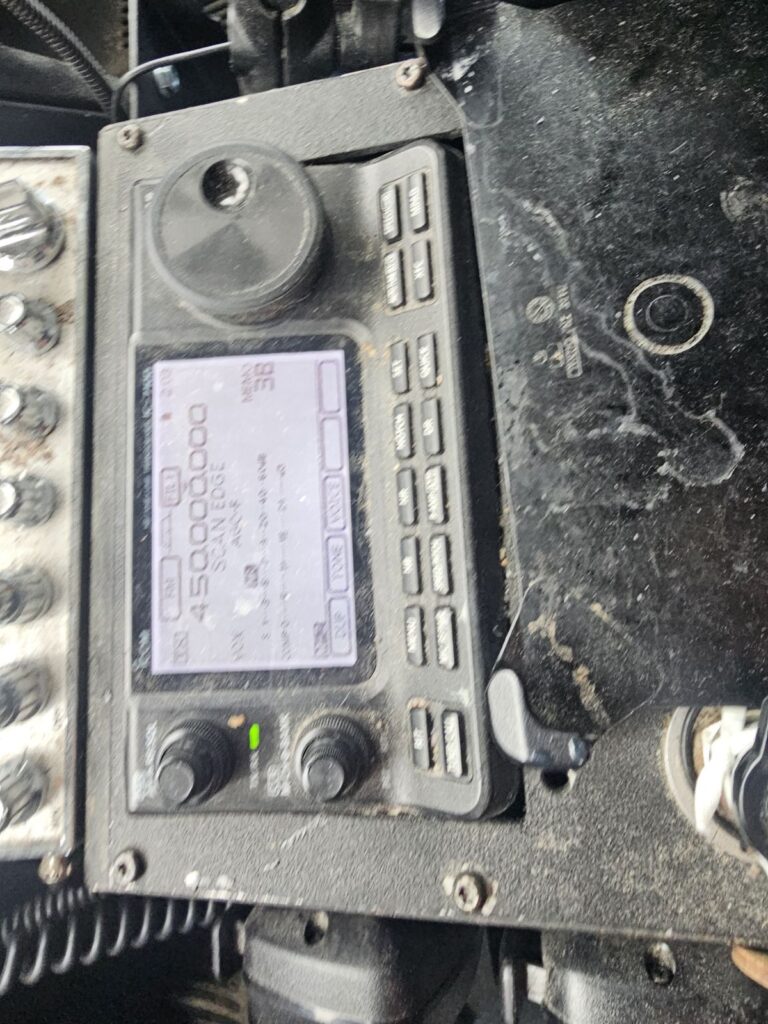 IC-7100 head and Cobra CB
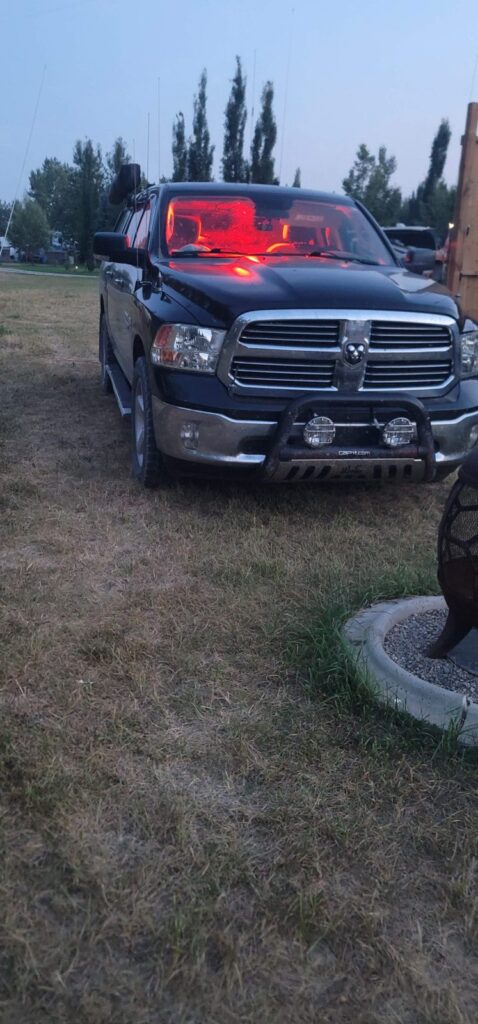 The cab glowing red at night
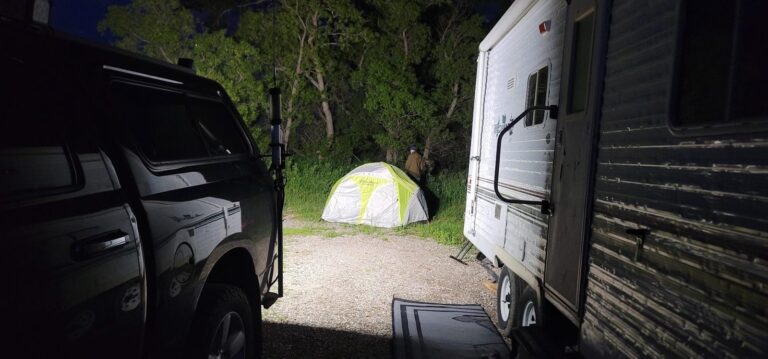 Topper LED lights at camp
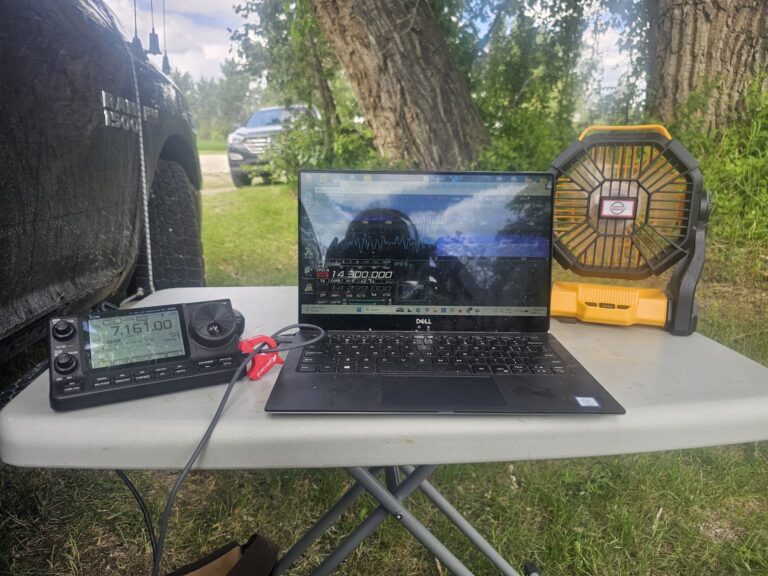 Field Day 2026 operating table
What’s on board
This section walks through Gary’s setup piece by piece. The models named here are the gear Gary owns and uses. They’re listed so you can see what his setup is, not as endorsements. Plenty of other gear does the same jobs.
HF radio
An Icom IC-7100 (all band, all mode, with D-STAR), with its main control head built into the console. For operating outside, a second control head on a 4.6 m (15 ft) extension plugs in under the front seat, so Gary can run the station from a camp chair while the radio stays in the truck.
VHF, UHF, DMR and more
A Yaesu FTM-400 with WIRES-X, a Kenwood TK-981 (900 MHz), a Kenwood TKD-740HK (LADD, VHF and DMR), a Cobra 148GTL CB, a Yaesu FTA-450 aircraft-band handheld, amateur and GMRS handhelds, an Arrow dual-band handheld Yagi, an RFinder B1+ for RoIP and DMR, and a weBoost cell booster.
HF antennas
A Tarheel 75A screwdriver on the truck with an auto tuner, plus a Buckmaster OCF dipole, a Chameleon Tactical Delta Loop and a 5.2 m (17 ft) steel whip with radials for when it’s parked.
Power
The 350 W solar panel on the topper, extra batteries and an inverter. Gary says that during a power failure he could have heat and some lights going in the house within about 15 minutes. He also has three generators.
Test gear
A RigExpert AA-235 antenna analyzer, a NanoVNA and a TinySA spectrum analyzer, for checking antennas, coax and noise before guessing.
Camp kit
Emergency kits, extra clothing, cookware and stoves. For Field Day, the rule was simple: if it didn’t fit in the truck, it stayed home.
Explore the truck station
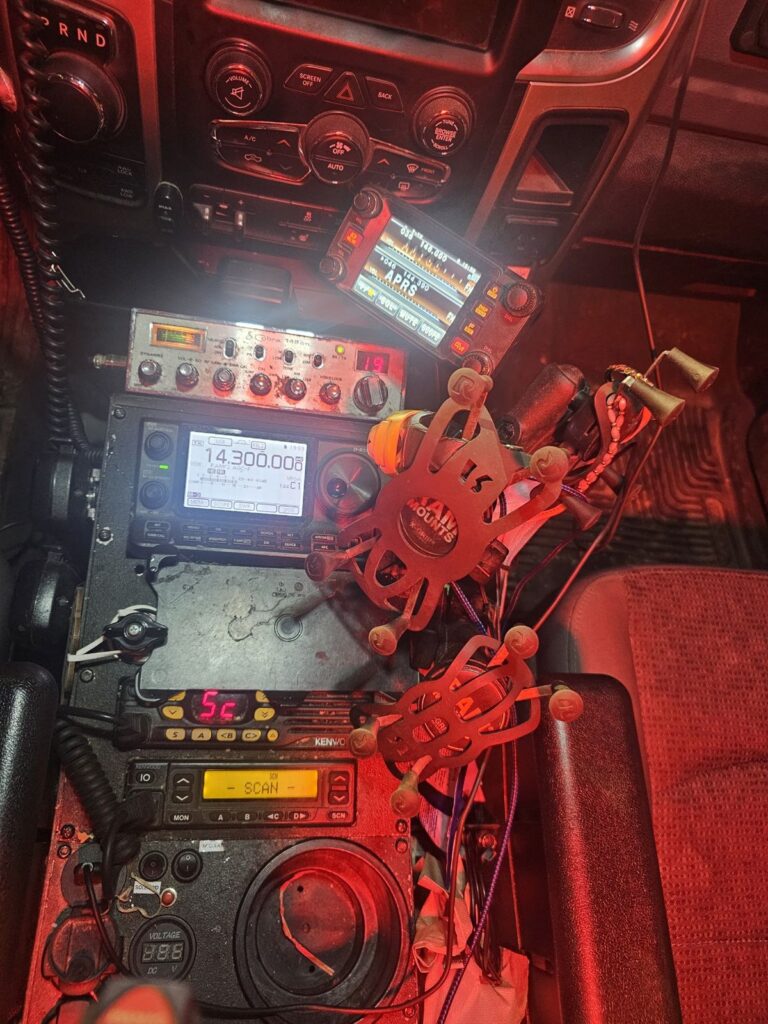
Photo tour (2026)
Inside and around the truck as it is now: the console radios, the wiring, the power panel, the topper, awning and antenna mount.
Radios and antennas
What each radio and antenna is for, the remote control head, antennas on the move versus parked or camped, and tuning with an analyzer.
Power and solar
Solar on the topper, extra batteries, the inverter, clean 13.8 V for the radios, and using a truck as backup power at home without hurting anyone.
Field Day and camp
The truck as a base camp, minimal camping with Cory, VE6COR, operating from the table, and a short checklist.
Two stations, one operator
The truck is half of Gary’s operating. The other half is a home HF station that he operates by remote control: a field mobile station and a remote home station, run by one operator. This section is about the truck, but it helps to know it doesn’t stand alone.
What Gary does with it
- Lots of mobile HF. Gary works HF from the truck regularly.
- FT8. He runs a lot of FT8 and is often spotted on PSK Reporter. See FT8 setup.
- Logging. Contacts go to QRZ and to ARRL’s Logbook of The World (LoTW). See the logbook.
- Net control. Each week Gary takes a net control shift for the Maritime Mobile Service Network (MMSN) on 14.300 MHz (20 m). The MMSN watches that frequency to help vessels and others who need assistance. See nets.
- Field Day and outings. Field Day and radio outings with his friend Cory, VE6COR. See Field Day and camp and contesting and Field Day.
Drive first, radio second. Operating from a moving vehicle has to fit within Alberta’s distracted-driving rules. Tuning, logging, FT8 and anything else that needs your eyes or both hands should wait until you’ve pulled over somewhere safe. The radios and antennas page explains what Alberta’s rules say about two-way radios.
Join the Mobile HF Ham Radio Operators group. Gary runs Mobile HF Ham Radio Operators, a private Facebook group of about 2,500 members, under the West Lethbridge Weather page. If you operate HF from a car, truck, camper or boat, come and join. Post photos of your own mobile setup, ask how other people solved a mounting or noise problem, and share what worked for you.
Want to write your amateur radio exam? Gary is an ISED Accredited Examiner. If you’d like to write your exam, send Gary a message through the Mobile HF Ham Radio Operators group and he’ll arrange it with you. New to it all? Start with getting your ham licence.
Sources
- Gary’s truck, gear, generators, quotes, Facebook group and examiner role: Gary Wheeler, VE6CV, in his own words.
- MMSN on 14.300 MHz, assisting vessels and others in need: ARRL, Maritime Mobile Service Network comes to the aid of vessel in distress (July 2020).
- Accredited examiners and the examiner search: ISED, Accredited examiners.
- LoTW: ARRL, Logbook of The World help.
- Alberta’s distracted-driving rules: see the Sources card on radios and antennas.
Where to go next
This site is built and looked after by Dok-Tor Harddrive Inc., Lethbridge IT services since 1990.