Power and Solar: the Truck as a Power Plant
Solar on the topper, extra batteries and an inverter keep the radios running at camp. When the power fails at home, they help keep the house going too.
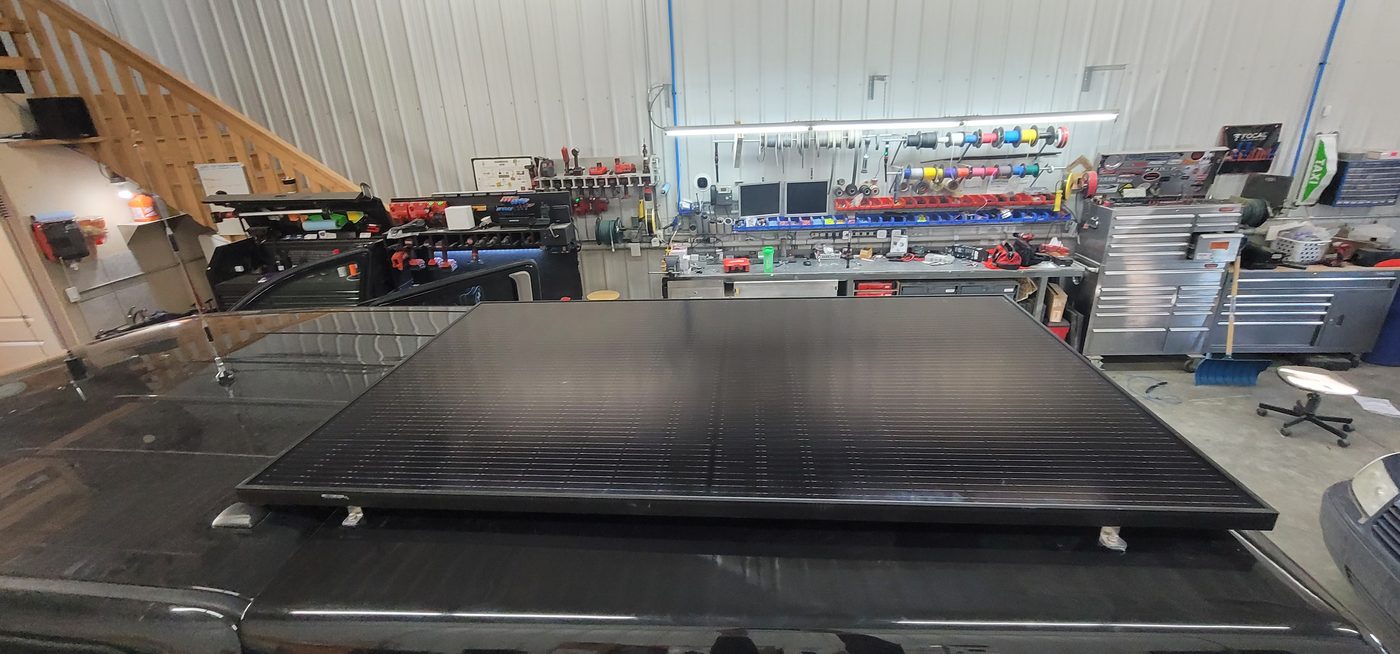
A radio is only as good as its power. Gary’s truck has a 350-watt solar panel on the Leer topper’s roof for the ham station. It also carries extra batteries and an inverter. Gary says that during a power failure he could have heat and some lights going in the house within about 15 minutes. He also has three generators.
This page covers what each piece does, how to keep the 13.8 V feeding your radios clean, and the safety rules for using a truck as backup power at home. It describes principles, not a wiring diagram. Before you build, read power wiring, and follow the manuals for your own radio and equipment.
Solar and batteries
The pieces and their jobs
Solar panel
The 350 W panel on the topper roof puts energy back into the station batteries whenever the sun is up. A solar panel charges batteries through a charge controller, never connected straight to the battery. Parked at camp, that means the radios keep going without running the engine.
Extra batteries
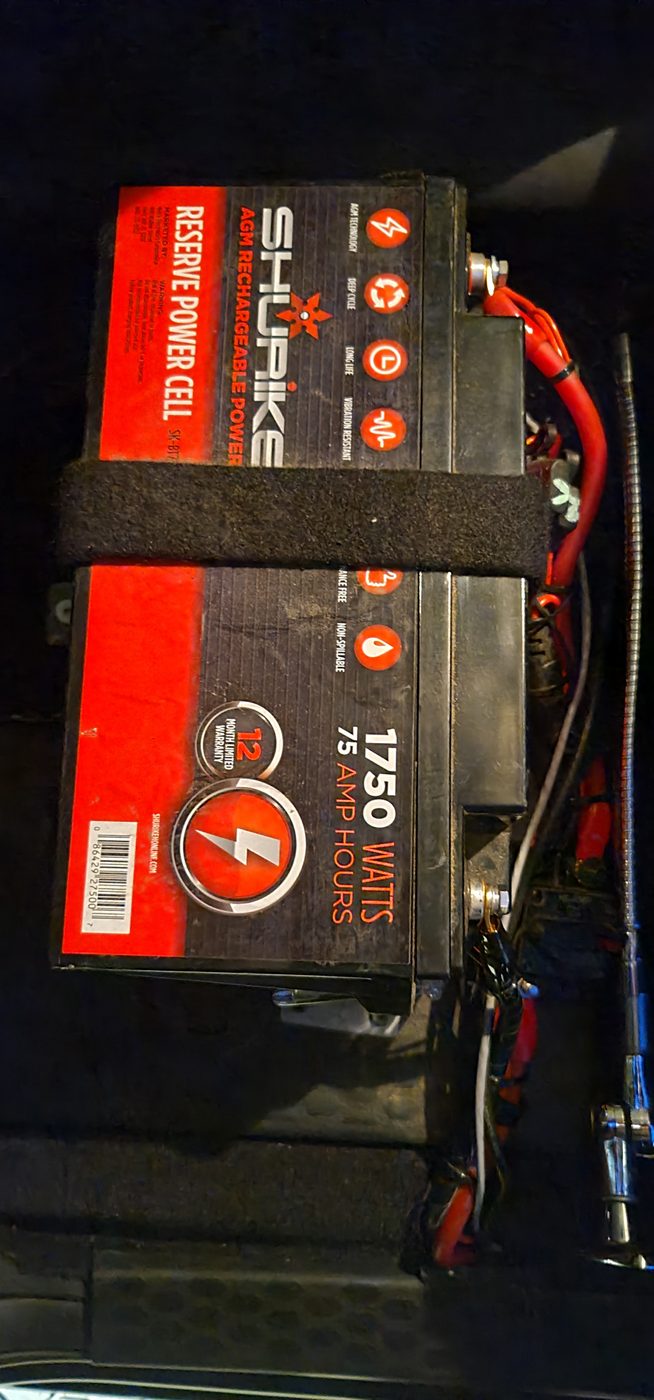
Station batteries store the energy. Keeping radio and camp loads on their own batteries protects the truck’s starting battery, so you can always get home.
Inverter
An inverter turns 12 V DC from the batteries into 120 V AC household power for things that need it. The radios don’t. They run on DC directly, which is simpler and wastes less energy.
Generators
Gary has three. A fuel-burning generator turns fuel into AC power for appliances and battery charging. It always runs outdoors, well away from buildings and windows. More on that below.
How long will the batteries last?
Before a camp or a power failure, it helps to know how long the station batteries will keep things going. Pick your battery type and size, add what you run and for how many hours, and add solar if you have it. The calculator shows the run-time in hours, how much of the battery one day uses, and plain warnings where something needs care. Load Gary’s truck radios fills in his own setup: two 110 Ah 6 V AGM batteries wired in series (12 V, 110 Ah), a 2,000 W inverter, the 350 W panel, a 40 A DC-DC charger from the alternator, and his four radios with the makers’ current figures. The radios run from a 100 A regulator that holds them at 13.8 V. The laptop, lights and hours in that example are typical values for illustration, not Gary’s, and you can add your driving hours to count the DC-DC charging.
Truck battery run-time calculator
How long will the station batteries keep the radios, lights and camp gear going? Pick the battery, add what you run, and add solar if you have it.
Estimates only. Most figures are typical values or makers’ specifications, so check the labels on your own gear. Batteries lose capacity with age and in the cold.
Keeping 13.8 V clean for the radios
Mobile radios are designed to run from a vehicle’s electrical system, nominally 13.8 V. An HF radio draws its heaviest current when transmitting. If the supply sags at those moments, or carries electrical noise, you’ll hear it in the receiver or on your signal. Most of keeping power clean comes down to wiring.
Fusing at the battery
A fuse protects the wire. If a cable chafes through and shorts to the body, the fuse is what stops it from becoming a fire. Put the fuse or breaker on the positive lead as close to the battery as you practically can, sized for the wire it protects. Whether to fuse the negative lead as well is debated among experienced mobile operators. Most amateur radio manuals show two fuses. Follow your radio’s manual, and see power wiring for the details.
Wire gauge
Choose cable heavy enough for the radio’s full transmit current and the length of the run. Long, thin wire drops voltage, and the radio sees less than the battery has. Keep runs as short as practical and make solid, properly crimped connections. If you’re unsure between two sizes, go thicker.
Wire straight to the battery
Take the radio’s power from the battery or a dedicated distribution point fed from it. Don’t use the accessory socket or the vehicle’s existing wiring. Some newer vehicles have a sensor on the battery’s negative cable. Check your vehicle’s guidance before connecting the radio’s negative lead there.
Hunt down noise
Inverters, solar charge controllers, battery chargers and DC-to-DC converters can all put out radio noise. If the band suddenly sounds worse at camp, switch these off one at a time and listen. Distance between the noisy gear and the radio and antenna helps, and so do ferrite chokes on the cables. A spectrum analyzer such as Gary’s TinySA shows you the noise instead of leaving you to guess. See RFI and neighbours.
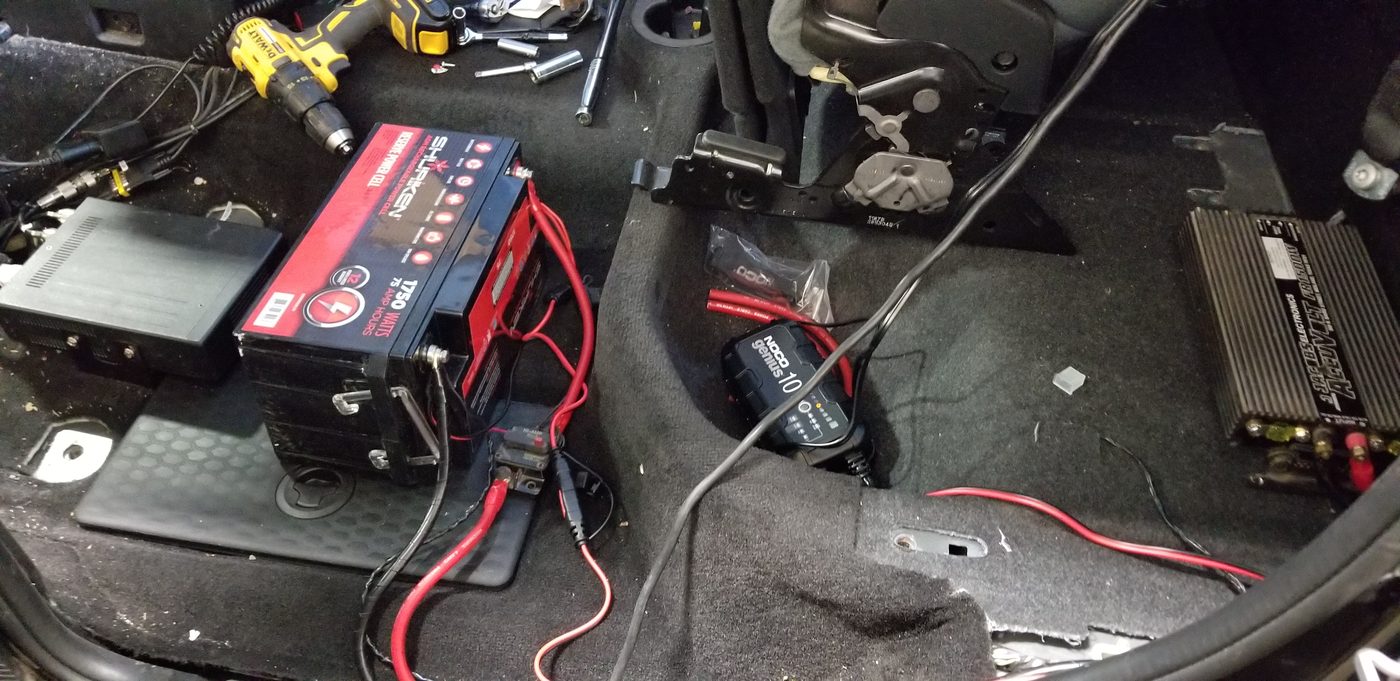
The 2021 rewire
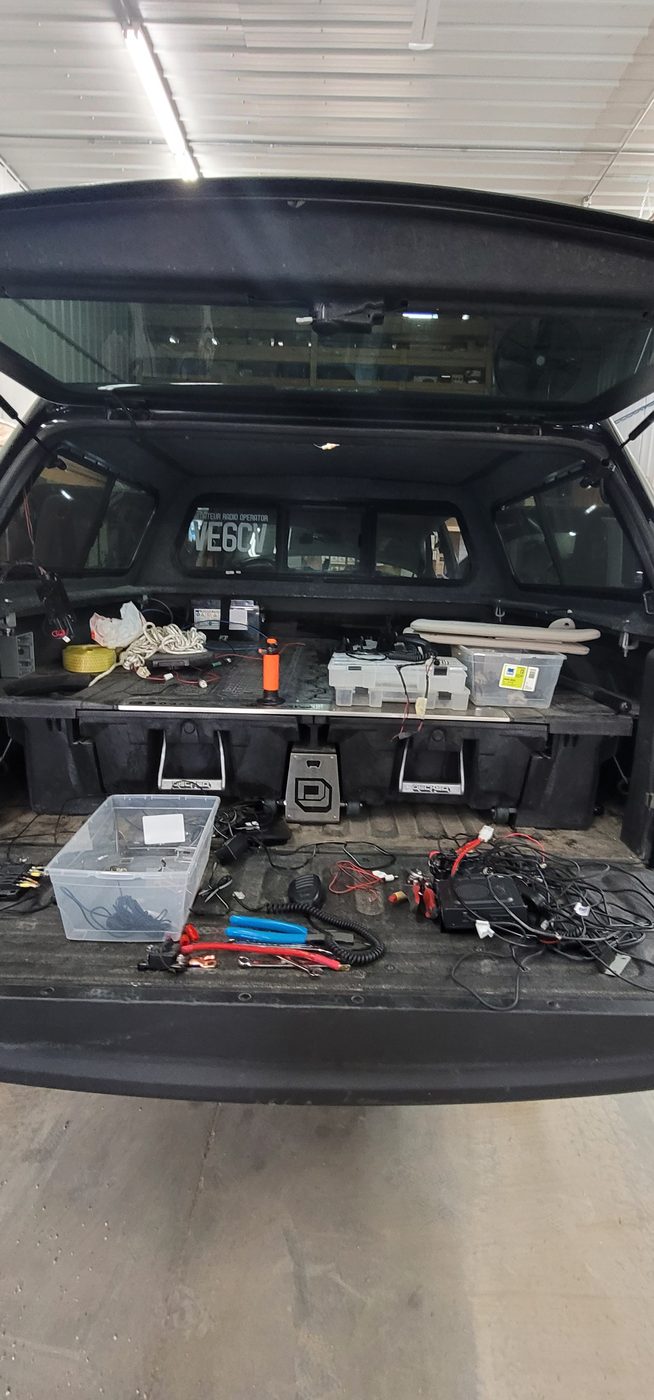
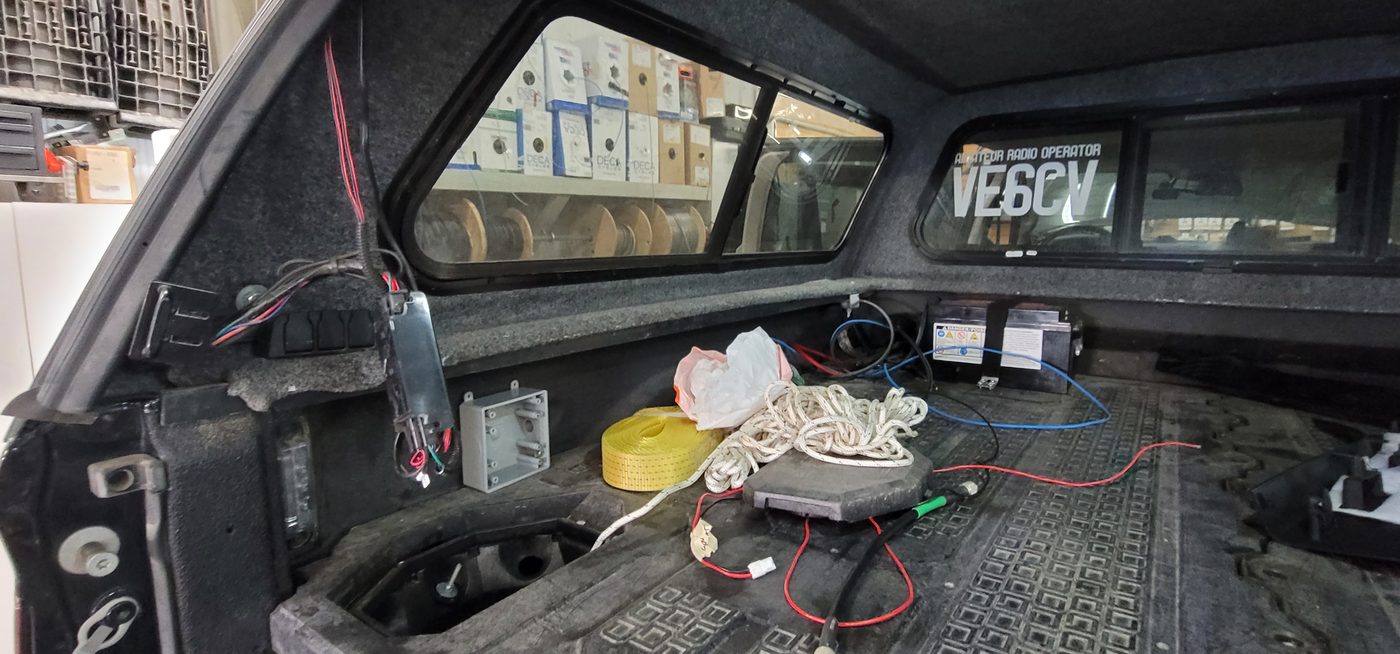
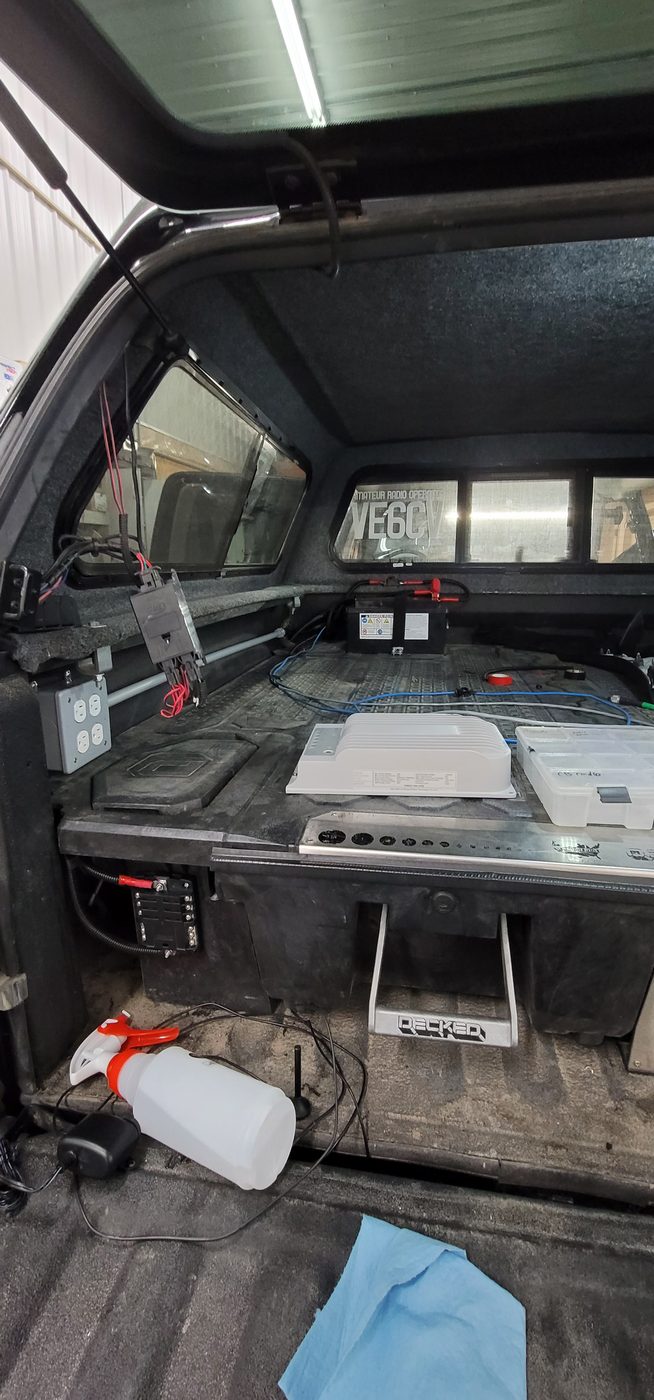
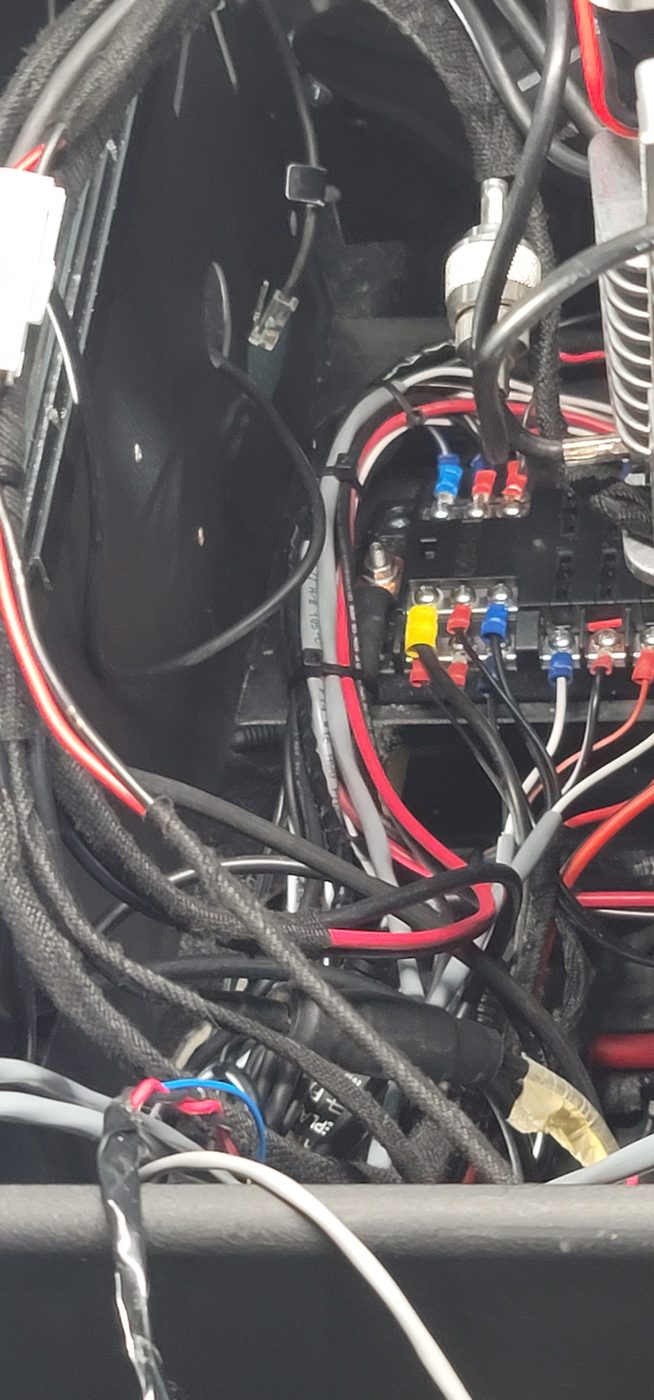
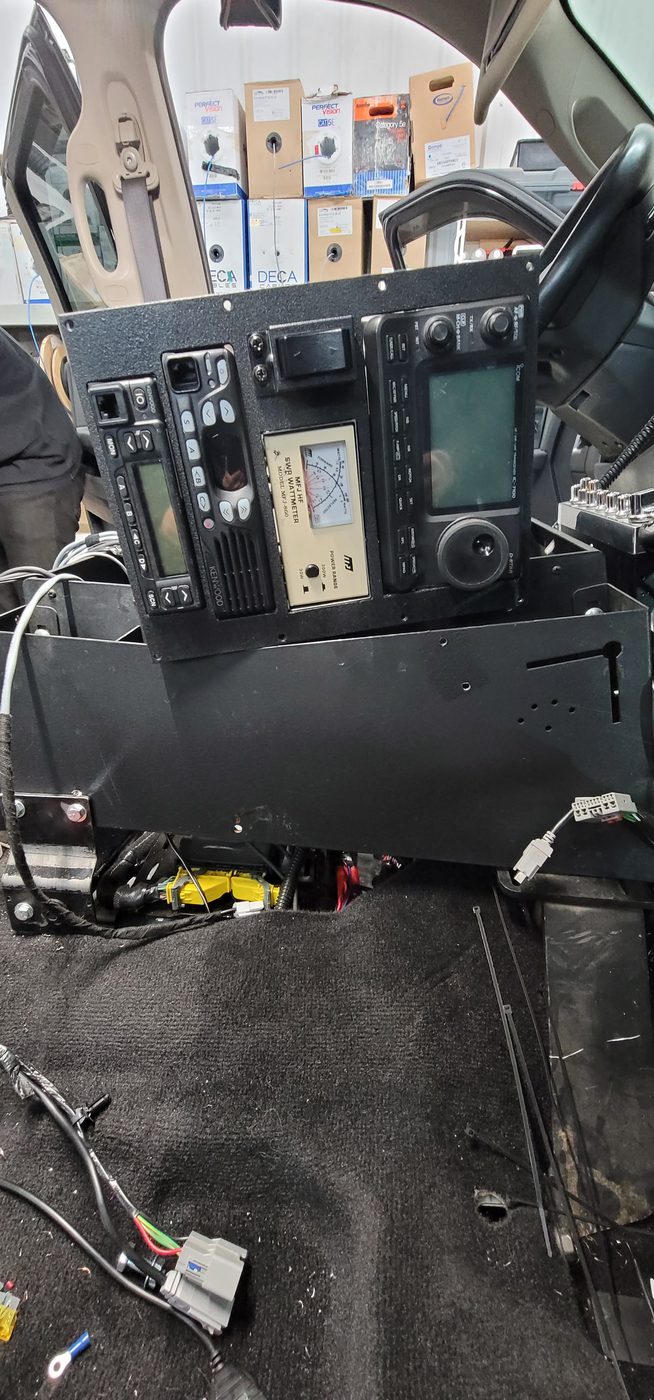
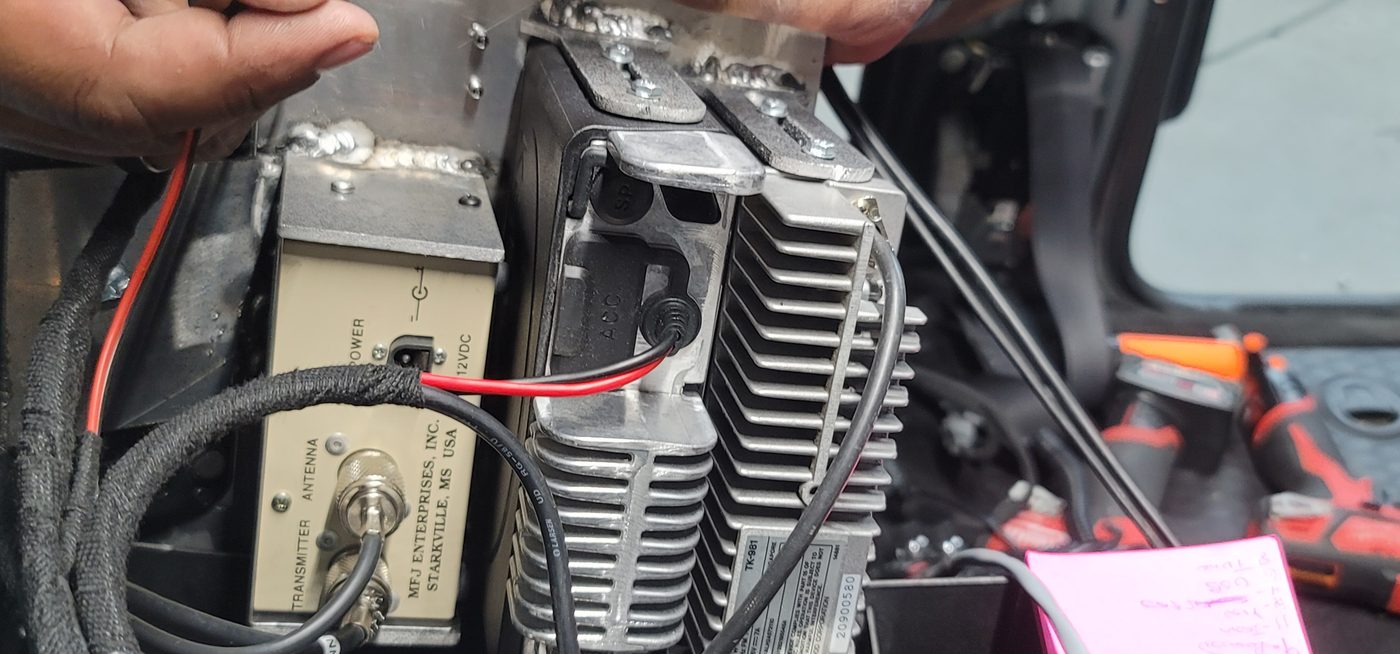
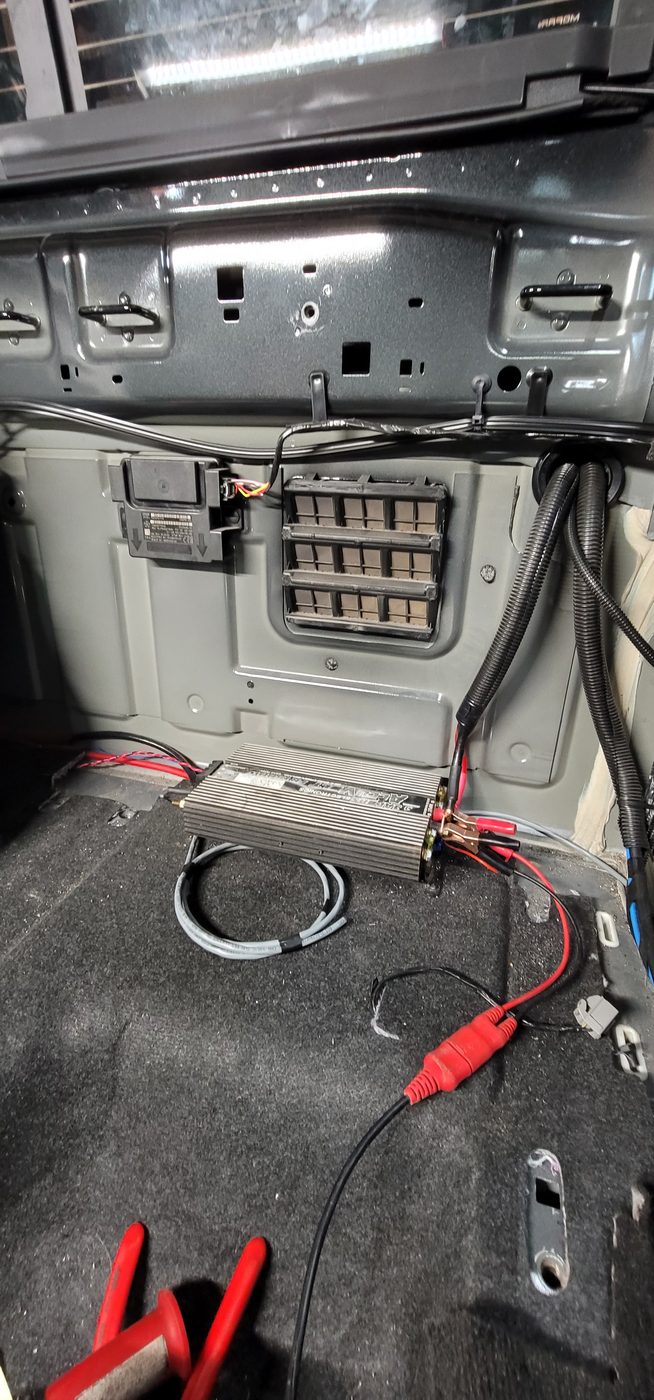
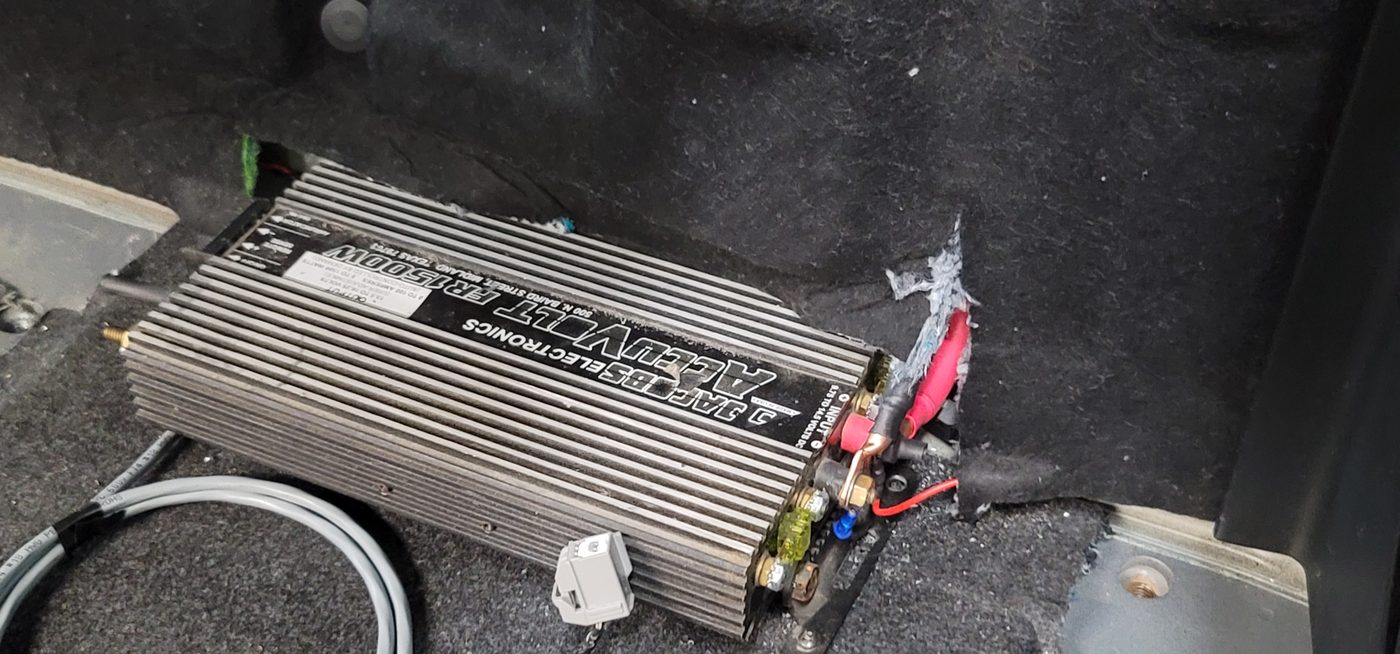
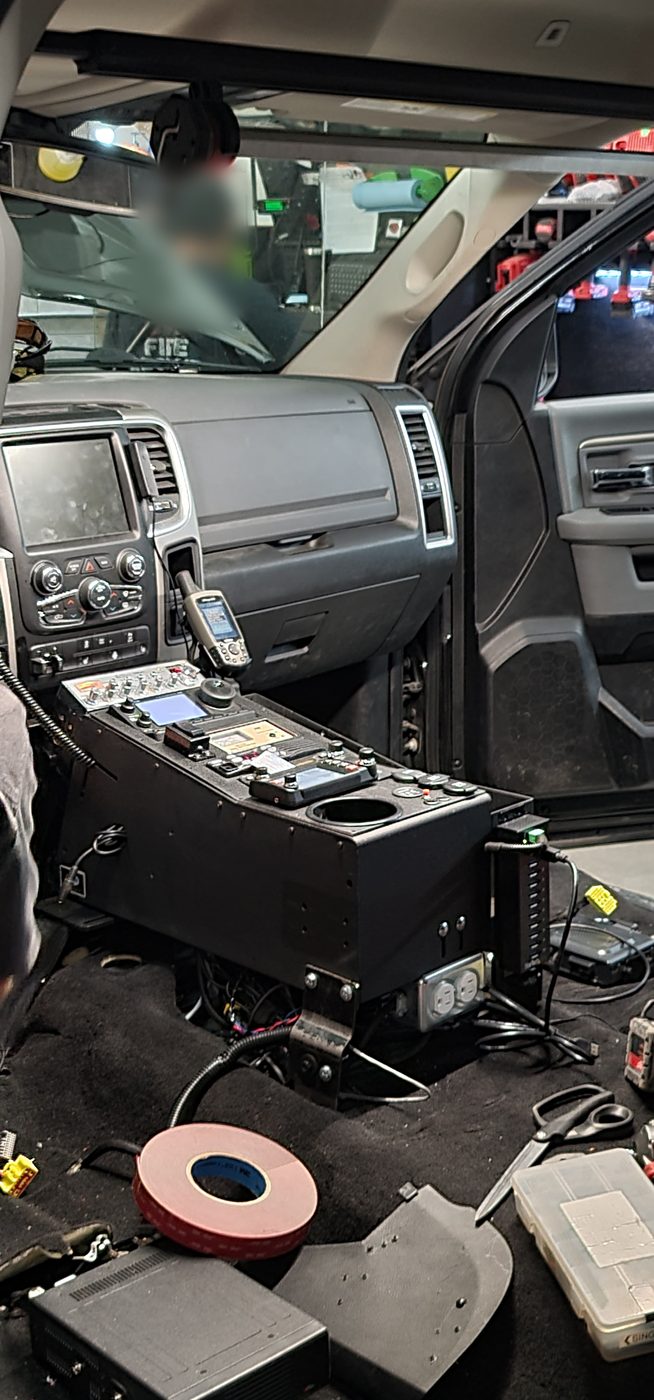
From the 2021 rewire that built the console.
Cold matters. Batteries lose usable capacity in the cold, and a southern Alberta winter will remind you. Read Keep your batteries warm and cold-weather operating.
Using the truck as backup power at home, safely
A truck with batteries, solar and an inverter makes a handy backup in an outage, and Gary says his can get heat and some lights going at home in about 15 minutes. This page doesn’t describe how Gary’s own house is connected. Whatever your setup, these rules apply to everyone.
Never backfeed. Never plug a generator into a wall outlet. The Government of Canada says a backup generator may only be connected to your home’s electrical system through an approved transfer panel and switch installed by a qualified electrician. The reason is the people working on the lines. Power fed back from your house can energize lines that utility crews believe are dead, and it can seriously injure or kill them. A transfer switch keeps the house on either utility power or backup power, never both. An inverter’s 120 V output is household power too, so the same rule applies to it.
Plug appliances in directly
Without a transfer switch, run what you need straight from the inverter or generator using properly rated, CSA-approved extension cords. Know what each appliance draws, and don’t overload the inverter or the cords.
Furnaces need a proper connection
In most homes the furnace is wired in permanently, so it can’t simply be plugged into a cord. Talk to a licensed electrician about a transfer switch before an outage, not during one.
Generators stay outside
Run fuel-burning generators outdoors, at least 6 m (20 feet) from any home or building. Point the exhaust away from windows and doors, and close the windows and doors near the generator.
Carbon monoxide
Keep working carbon monoxide alarms in the house. Never idle the truck in a garage, even with the door open. Battery and solar power produce no carbon monoxide, which is one reason they’re so useful.
For the household side of an outage, including food safety, heat, alarms and what to do when the power comes back, see Power outages on LethbridgeWeather.ca.
How do you power your mobile station? Share your solar, battery and wiring builds with about 2,400 other mobile operators in Gary’s Mobile HF Ham Radio Operators group on Facebook.
Sources
- Gary’s solar panel, batteries, inverter, three generators and the 15-minute estimate: Gary Wheeler, VE6CV.
- Generator connection only through an approved transfer panel and switch installed by a qualified electrician; never into a wall outlet; at least 6 m (20 feet) from buildings; exhaust direction; CSA-approved cords; carbon monoxide alarms; battery and solar units produce no carbon monoxide: Government of Canada, Power outages: how to prepare.
- Backfeed danger to utility workers, and how a transfer switch prevents it: Generac, Why you should never back-feed your electric panel with a generator.
- Not idling a vehicle in a garage, even with the door open: Government of Canada, Winter storms: how to prepare.
- Fuses near the battery, a fuse’s job, the one-fuse-or-two debate and most amateur manuals showing two fuses, avoiding the accessory socket, and the battery sensor on some vehicles: Bob Witte, K0NR, Mobile DC Power: One Fuse or Two? (AmateurRadio.com, 2020).
- Run-time calculator, lithium iron phosphate: 12.8 V nominal; 2,500 cycles at 80% depth of discharge, 5,000 at 50%; charge temperature +5 °C to +50 °C: Victron Energy, 12.8 V Lithium-Iron-Phosphate Batteries Smart datasheet.
- Run-time calculator, AGM: 600 cycles at 50% discharge, 400 at 80%; capacity rated at a 20-hour discharge, and less at higher currents: Victron Energy, GEL and AGM Batteries datasheet.
- Run-time calculator, deep-cycle batteries used to a maximum 50% depth of discharge: Rolls Battery, What is the best battery for off-grid systems?
- Run-time calculator, radio currents: Yaesu UK, FT-710 specifications (1.8 A / 2.2 A receive, 21 A at 100 W, 13.8 V ±15%); Icom America, IC-7100 (22 A transmit on HF/50 MHz, 1.2/0.9 A receive, 13.8 V ±15%) and IC-2730A, the North American IC-2730 (13 A transmit, 1.8/1.2 A receive); Yaesu, FTM-400 series technical supplement (0.5 A receive, 11 A / 12 A at 50 W).
- Run-time calculator, operating duty factors (conversational SSB 20%, or 40% with moderate processing; conversational CW 40%): ARRL, FCC RF Exposure Regulations: The Station Evaluation, Table 2.
- Run-time calculator, FT8 timing (15-second transmit/receive periods, 79 symbols of 0.160 s each, constant amplitude): Steve Franke, K9AN, Bill Somerville, G4WJS, and Joe Taylor, K1JT, The FT4 and FT8 Communication Protocols, QEX, July/August 2020.
- Run-time calculator, Lethbridge’s average daily solar energy on a flat surface (3.77 kWh/m², from Natural Resources Canada): Mansouri Kouhestani et al., Evaluating solar energy technical and economic potential on rooftops in an urban setting: the city of Lethbridge, Canada, International Journal of Energy and Environmental Engineering 10 (2019). The 0.75 performance ratio: Natural Resources Canada, Photovoltaic potential and solar resource maps of Canada.
- Run-time calculator, never using barbecues, camp stoves or portable burners indoors or in a garage; generators at least 6 m from buildings; carbon monoxide alarms: Government of Canada, Power outages: how to prepare.